Elon Musk Ally Tells Staff ‘AI-First’ Is the Future of Key Government Agency
Sources say the former Tesla engineer now in charge of the Technology Transformation Services wants an agency that operates like a “startup software company.”
Sources say the former Tesla engineer now in charge of the Technology Transformation Services wants an agency that operates like a “startup software company.”
The neural network artificial intelligence models used in applications like medical image processing and speech recognition perform operations on hugely complex data structures that require an enormous amount of computation to process. This is one reason deep-learning models consume so much energy.
AI agents will bring enterprises to the next level, but the same applies to related vulnerabilities. Here are key tips to follow.Read More
Engineers between 19 and 24, most linked to Musk’s companies, are playing a key role as he seizes control of federal infrastructure.
Augmenting the multi-step reasoning abilities of Large Language Models (LLMs) has been a persistent challenge. Recently, verification has shown promise in improving solution consistency by evaluating generated outputs. However, current verification approaches suffer from sampling inefficiencies, requiring a large number of samples to achieve satisfactory performance. Additionally, training an effective verifier often depends on extensive …
Read more “Step-by-Step Reasoning for Math Problems via Twisted Sequential Monte Carlo”
Chains of smaller, specialized AI agents aren’t just more efficient — they will help solve problems in ways we never imagined.Read More
“I think the information that you’re going to have about this is available to you right now,” Stephanie Holmes told workers at Elon Musk’s DOGE who pressed for detail on offers of “deferred resignation.”
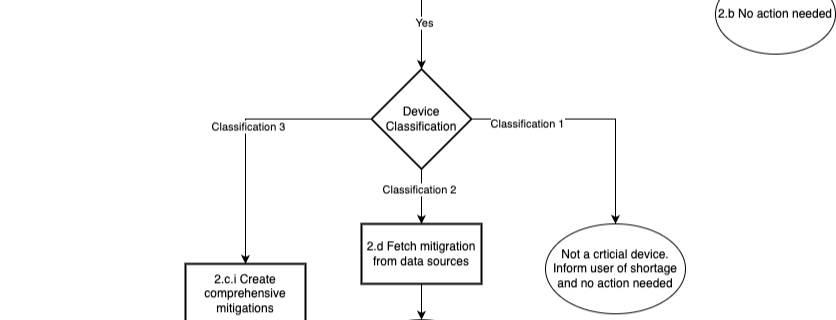
From pandemic shutdowns to geopolitical tensions, recent years have thrown our global supply chains into unexpected chaos. This turbulent period has taught both governments and organizations a crucial lesson: supply chain excellence depends not just on efficiency but on the ability to navigate disruptions through strategic risk management. By leveraging the generative AI capabilities and …
Read more “Harnessing Amazon Bedrock generative AI for resilient supply chain”
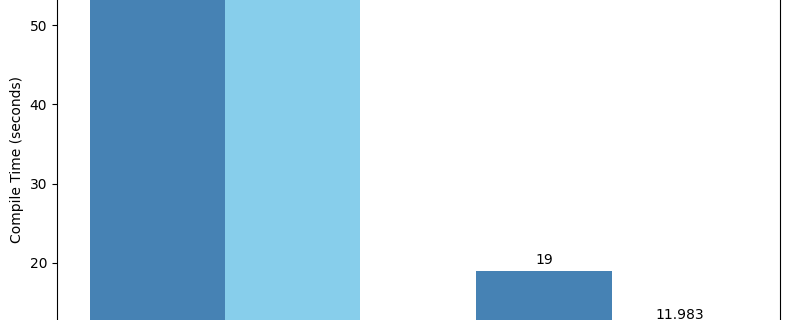
For developers who want to use the PyTorch deep learning framework with Cloud TPUs, the PyTorch/XLA Python package is key, offering developers a way to run their PyTorch models on Cloud TPUs with only a few minor code changes. It does so by leveraging OpenXLA, developed by Google, which gives developers the ability to define …
Read more “Improving model performance with PyTorch/XLA 2.6”
Sam Altman, CEO of OpenAI, admits the company was “on the wrong side of history” in the open source AI debate during a Reddit AMA, signaling a potential strategy shift as Chinese competitor DeepSeek disrupts the market with efficient, open models.Read More