Allright, which one of you is this?
submitted by /u/DigiDigiDongxx [link] [comments]
submitted by /u/DigiDigiDongxx [link] [comments]
Laziness is not a religion.
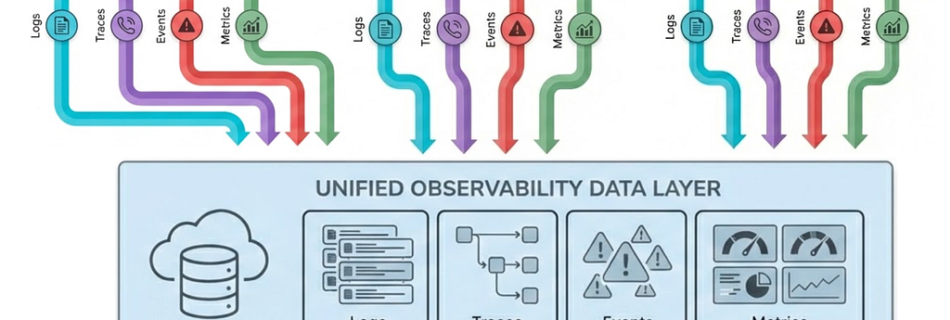
Prasanna Vijayanathan, Renzo Sanchez-Silva When Jake Paul and Mike Tyson stepped into the ring in November 2024, we delivered the fight to roughly 65 million concurrent streams. On an ordinary day our infrastructure takes in more than 2 billion requests and handles upwards of 38 million real-time logging events every second. At that scale, the …
Read more “Ontology-Driven Observability: Building an End-to-End Knowledge Graph at Netflix Scale”
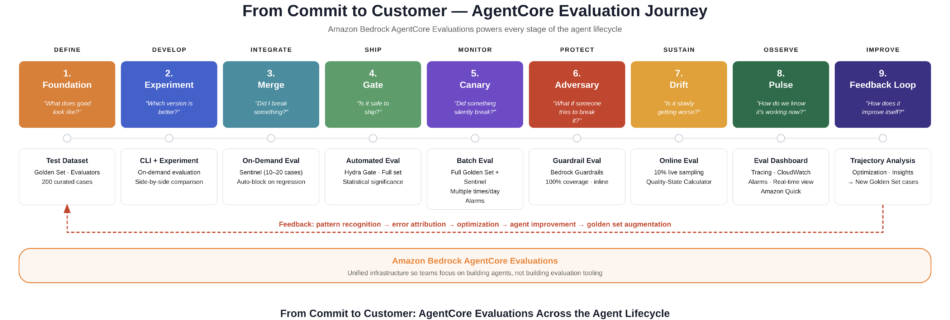
The North Star Every organization racing to deploy AI agents faces the same reckoning: an agent that demos beautifully can quietly degrade in production, and by the time a human notices, the trust is already broken. Where traditional software fails loudly, agents fail softly. They return an answer that looks confident, reads fluently, and is …
In production systems today, most AI agents operate as lightweight dispatchers. They parse a prompt, make an API call, retrieve a record, and hand back control. Their execution is fast, stateless and cheap. Biotechnology does not work this way. Folding a protein target, screening a 50,000 compound ligand library, or evaluating structure-activity relationships (SAR) are …
Read more “Architecting autonomy: A design pattern for high-compute, governed agents in biotech”
The metric might not mean much to laypeople, but leap seconds have been a source of contention in the timekeeping community for years. Now, they’re dead.
Information about food properties that determine quality, safety and sensory characteristics is critical for food product development and processing design, but it is spread across thousands of scientific papers written over decades, making it difficult for food engineers to access and analyze data.
submitted by /u/Different_Fix_2217 [link] [comments]
In this article, you will learn how to choose the right chunking strategy for a retrieval-augmented generation system by working through a structured decision tree…