1oFq 6JphuwR2l1zG6i8J5A

Ontology-Driven Observability: Building an End-to-End Knowledge Graph at Netflix Scale

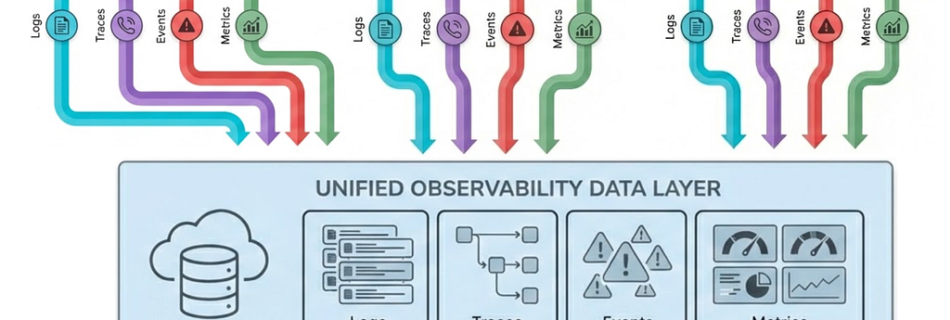
Prasanna Vijayanathan, Renzo Sanchez-Silva When Jake Paul and Mike Tyson stepped into the ring in November 2024, we delivered the fight to roughly 65 million concurrent streams. On an ordinary day our infrastructure takes in more than 2 billion requests and handles upwards of 38 million real-time logging events every second. At that scale, the …

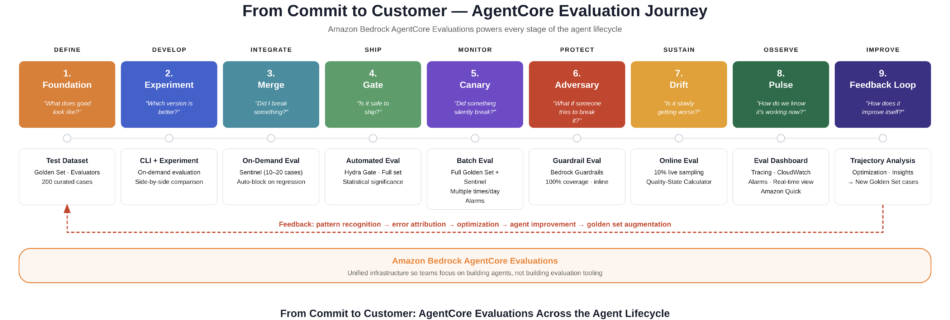
AgentCore Evaluation Journey

Building trust in AI agents: A production-ready evaluation framework with Amazon Bedrock AgentCore

The North Star Every organization racing to deploy AI agents faces the same reckoning: an agent that demos beautifully can quietly degrade in production, and by the time a human notices, the trust is already broken. Where traditional software fails loudly, agents fail softly. They return an answer that looks confident, reads fluently, and is …

Architecting autonomy: A design pattern for high-compute, governed agents in biotech

In production systems today, most AI agents operate as lightweight dispatchers. They parse a prompt, make an API call, retrieve a record, and hand back control. Their execution is fast, stateless and cheap. Biotechnology does not work this way.  Folding a protein target, screening a 50,000 compound ligand library, or evaluating structure-activity relationships (SAR) are …

ML 22194 1

Meta’s Muse Spark Open now available in Amazon SageMaker JumpStart

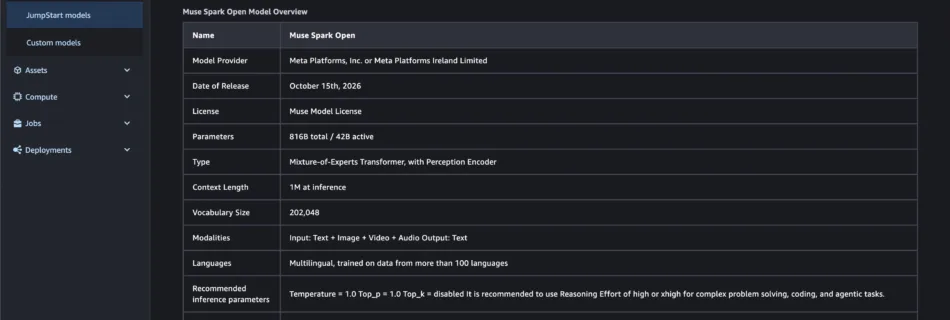
Muse Spark Open, Meta’s coding-optimized open-weight model, is now available in Amazon SageMaker JumpStart, the machine learning (ML) hub of Amazon SageMaker AI. The model was trained on real developer workflows, such as multi-file refactors and long debugging sessions, and it supports a context window of 1 million tokens. You can deploy it to a …

The Design Space of Tri-Modal Masked Diffusion Models

Discrete diffusion models have emerged as strong alternatives to autoregressive language models, with recent work initializing and finetuning a base unimodal model for bi-modal generation. Diverging from previous approaches, we introduce the first tri-modal Masked Diffusion Models (MDM) pretrained from scratch on text, image-text, and audio-text data. We systematically analyze multimodal scaling laws, modality mixing …

19xBaz1zkvALNwB3iT3xK8g

Integrating Netflix’s Foundation Model into Personalization applications

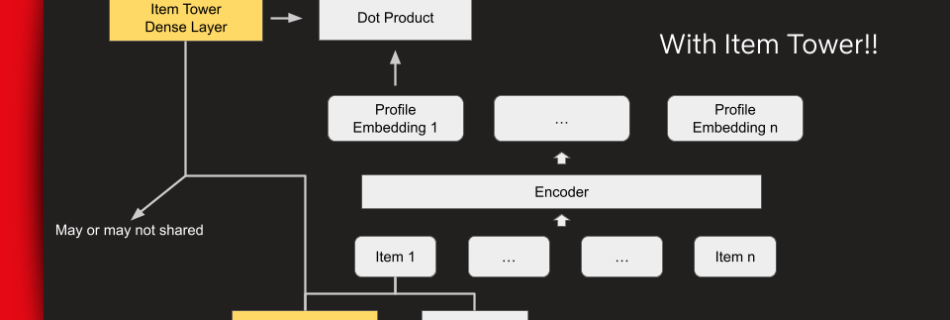
Authors: Divya Gadde, Ko-Jen Hsiao, Dhaval Patel and Moumita Bhattacharya The motivation for building the Netflix Foundation Model for personalization was laid out in this previous blog post. The Netflix homepage is powered by several specialized models and it requires significant time and resources to maintain and continue innovating on these individual models. Therefore, we …

Architecture 2

Build self-improving document processing using Amazon Bedrock AgentCore

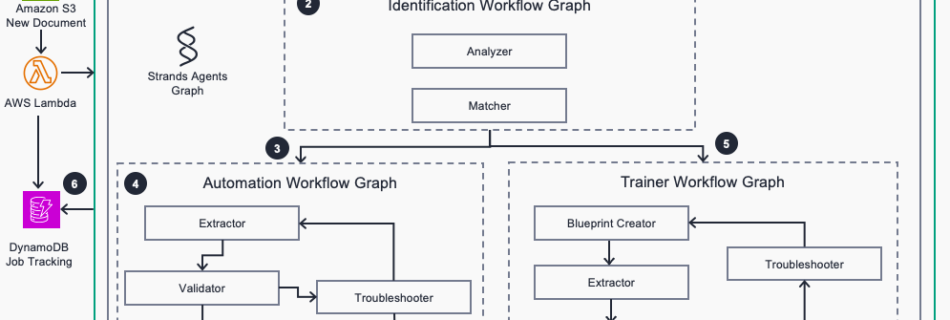
IDC research shows that document-related challenges cost organizations $19,732 for each information worker annually and reduce productivity by 21.3 percent. Organizations receiving invoices from hundreds of suppliers often face layouts that vary by issuer and change without notice. Template-based systems require constant maintenance at this scale. Staff can spend up to 30 percent of their …

1 dxxy8WSmax 1000x1000 1

Predictable AI spend in BigQuery: Introducing cost management for generative AI functions

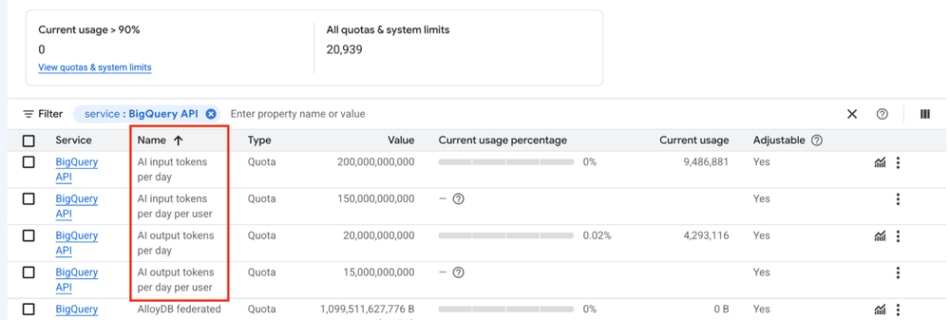
The generative AI functions in BigQuery (AI.GENERATE, AI.IF, AI.CLASSIFY, AI.SCORE, and more) bring large language models (LLMs) directly into your SQL, so a single query can classify millions of support tickets or score each product review for sentiment. However, because these functions are billed by the token, scaling them across massive datasets highlights the importance …