Parameters vs FLOPs: Scaling Laws for Optimal Sparsity for Mixture-of-Experts Language Models

Scaling the capacity of language models has consistently proven to be a reliable approach for improving performance and unlocking new capabilities. Capacity can be primarily defined by two dimensions: the number of model parameters and the compute per example. While scaling typically involves increasing both, the precise interplay between these factors and their combined contribution …

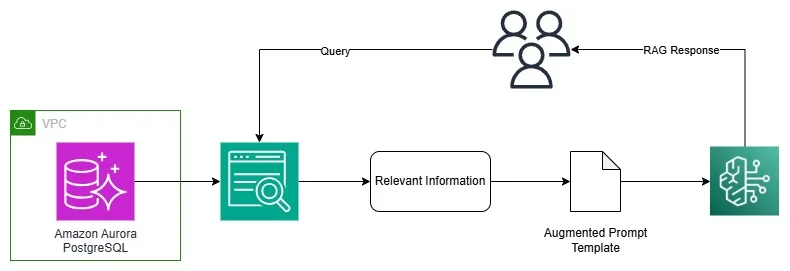
ML 16454 solution architecture

Develop a RAG-based application using Amazon Aurora with Amazon Kendra

Generative AI and large language models (LLMs) are revolutionizing organizations across diverse sectors to enhance customer experience, which traditionally would take years to make progress. Every organization has data stored in data stores, either on premises or in cloud providers. You can embrace generative AI and enhance customer experience by converting your existing data into …

Case study demonstrates practical applications for quantum machine learning

Quantum researchers from CSIRO, Australia’s national science agency, have demonstrated the potential for quantum computing to significantly improve how we solve complex problems involving large datasets, highlighting the potential of using quantum in areas such as real-time traffic management, agricultural monitoring, health care, and energy optimization.

Unlocking AI’s ROI Potential: A Strategic Guide for Financial Services

The adoption of generative AI (GenAI) is transforming industries, with financial services at the forefront of this evolution. However, as banks and other financial institutions embrace AI’s promise, they face a pivotal challenge: how to balance innovation with strategic risk management while maximizing ROI. In this blog, we explore key considerations for integrating AI effectively …