Microsoft introduces rStar-Math, an SLM for math reasoning and problem solving

A team of math and AI researchers at Microsoft Asia has designed and developed a small language model (SLM) that can be used to solve math problems. The group has posted a paper on the arXiv preprint server outlining the technology and math behind the new tool and how well it has performed on standard …

Privacy-Computation Trade-offs in Private Repetition and Metaselection

A Private Repetition algorithm takes as input a differentially private algorithm with constant success probability and boosts it to one that succeeds with high probability. These algorithms are closely related to private metaselection algorithms that compete with the best of many private algorithms, and private hyperparameter tuning algorithms that compete with the best hyperparameter settings …

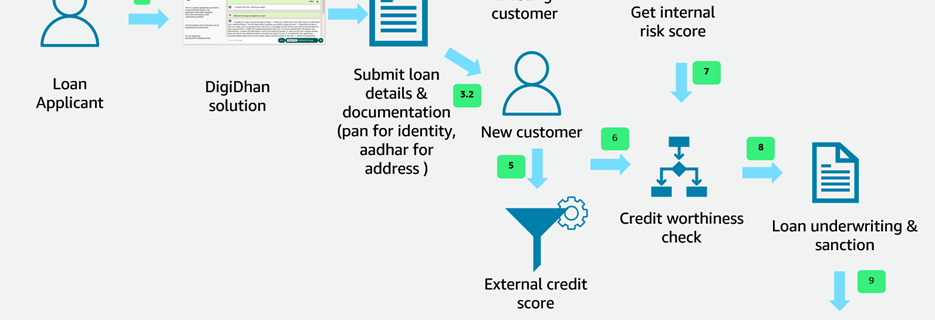
ML 17498 Fig1

Build an Amazon Bedrock based digital lending solution on AWS

Digital lending is a critical business enabler for banks and financial institutions. Customers apply for a loan online after completing the know your customer (KYC) process. A typical digital lending process involves various activities, such as user onboarding (including steps to verify the user through KYC), credit verification, risk verification, credit underwriting, and loan sanctioning. …

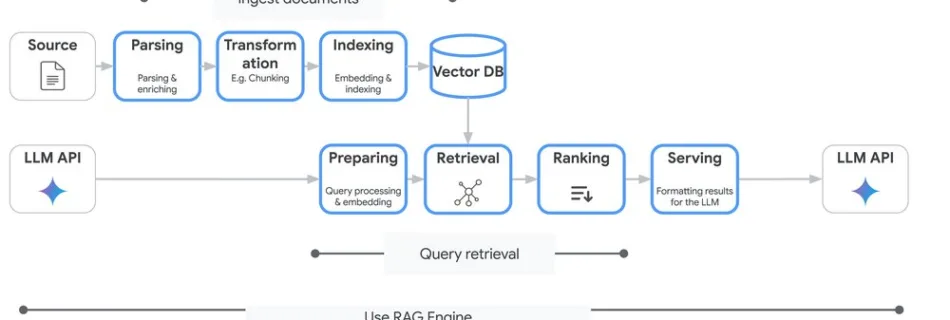
Vertex RAG Diagram.max 1000x1000 1

Introducing Vertex AI RAG Engine: Scale your Vertex AI RAG pipeline with confidence

Closing the gap between impressive model demos and real-world performance is crucial for successfully deploying generative AI for enterprise. Despite the incredible capabilities of generative AI for enterprise, this perceived gap may be a barrier for many developers and enterprises to “productionize” AI. This is where retrieval-augmented generation (RAG) becomes non-negotiable – it strengthens your …

Machine learning algorithm enables faster, more accurate predictions on small tabular data sets

Filling gaps in data sets or identifying outliers—that’s the domain of the machine learning algorithm TabPFN, developed by a team led by Prof. Dr. Frank Hutter from the University of Freiburg. This artificial intelligence (AI) uses learning methods inspired by large language models. TabPFN learns causal relationships from synthetic data and is therefore more likely …