Vultures and artificial intelligence(s) as death detectors: High-tech approach for wildlife research and conservation

In order to use remote locations to record and assess the behavior of wildlife and environmental conditions, the GAIA Initiative developed an artificial intelligence (AI) algorithm that reliably and automatically classifies behaviors of white-backed vultures using animal tag data. As scavengers, vultures always look for the next carcass. With the help of tagged animals and …
In the ‘Wild West’ of AI chatbots, subtle biases related to race and caste often go unchecked

Recently, LinkedIn announced its Hiring Assistant, an artificial intelligence “agent” that performs the most repetitious parts of recruiters’ jobs—including interacting with job candidates before and after interviews. LinkedIn’s bot is the highest-profile example in a growing group of tools—such as Tombo.ai and Moonhub.ai—that deploy large language models to interact with job seekers.

ML 17864 image001 new

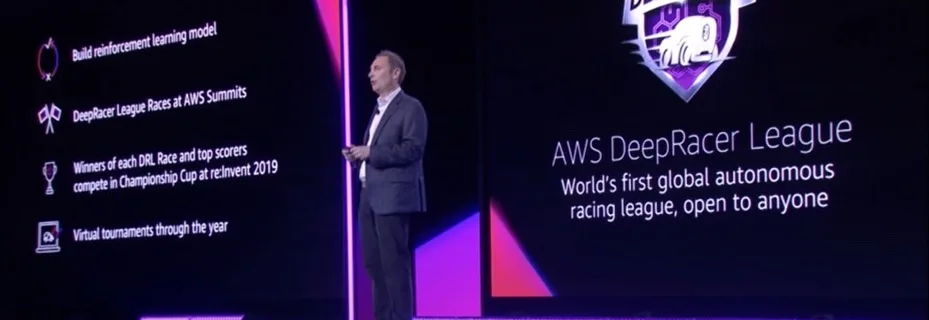
Racing into the future: How AWS DeepRacer fueled my AI and ML journey

In 2018, I sat in the audience at AWS re:Invent as Andy Jassy announced AWS DeepRacer—a fully autonomous 1/18th scale race car driven by reinforcement learning. At the time, I knew little about AI or machine learning (ML). As an engineer transitioning from legacy networks to cloud technologies, I had never considered myself a developer. …

Researchers explore how to bring larger neural networks closer to the energy efficiency of biological brains

The more lottery tickets you buy, the higher your chances of winning, but spending more than you win is obviously not a wise strategy. Something similar happens in AI powered by deep learning: we know that the larger a neural network is (i.e., the more parameters it has), the better it can learn the task …

Effortless robot movements

Humans and animals move with remarkable economy without consciously thinking about it by utilizing the natural oscillation patterns of their bodies. A new tool can now utilize this knowledge for the first time to make robots move more efficiently.

Duo-LLM: A Framework for Studying Adaptive Computation in Large Language Models

This paper was accepted at the Efficient Natural Language and Speech Processing (ENLSP) Workshop at NeurIPS 2024. Large Language Models (LLMs) typically generate outputs token by token using a fixed compute budget, leading to inefficient resource utilization. To address this shortcoming, recent advancements in mixture of expert (MoE) models, speculative decoding, and early exit strategies …