OpenAI expands Realtime API with new voices and cuts prices for developers
OpenAI’s voice assistant API offers five new, more natural voices and discounted prices in the newest update.Read More
OpenAI’s voice assistant API offers five new, more natural voices and discounted prices in the newest update.Read More
The race for better generative AI is also a race for more computing power. On that score, according to CEO Mark Zuckerberg, Meta appears to be winning.
A team including researchers from Seoul National University College of Engineering has developed neuromorphic hardware capable of performing artificial intelligence (AI) computations with ultra-low power consumption. The research, published in the journal Nature Nanotechnology, addresses fundamental issues in existing intelligent semiconductor materials and devices while demonstrating potential for array-level technology.
Computer vision (CV) is a field where machines learn to “see” and understand images or videos.
This paper was accepted at the Efficient Natural Language and Speech Processing (ENLSP) workshop at NeurIPS 2024. Speculative decoding is a prominent technique to speed up the inference of a large target language model based on predictions of an auxiliary draft model. While effective, in application-specific settings, it often involves fine-tuning both draft and target …
Read more “Speculative Streaming: Fast LLM Inference Without Auxiliary Models”
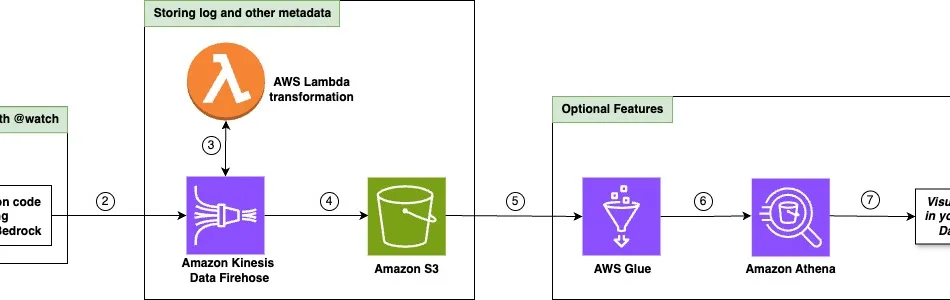
Recently, we’ve been witnessing the rapid development and evolution of generative AI applications, with observability and evaluation emerging as critical aspects for developers, data scientists, and stakeholders. Observability refers to the ability to understand the internal state and behavior of a system by analyzing its outputs, logs, and metrics. Evaluation, on the other hand, involves …

Today, we’re announcing that GitHub will make Gemini models – starting with Gemini 1.5 Pro – available to developers on its platform for the first time through a new partnership with Google Cloud. Developers value flexibility and control in choosing the best model suited to their needs — and this partnership shows that the next …
It turns out that LLMs encode quite a bit of knowledge about the truthfulness of their answers, even when they give the wrong one.Read More
Within hours of being freed from a low-security prison where he’d been serving time on contempt charges, the MAGA architect was rallying his troops on a Rumble stream.
By applying an electric field, the movement of microswimmers can be manipulated. Scientists describe the underlying physical principles by comparing experiments and theoretical modeling predictions. They are able to tune the direction and mode of motion through a microchannel between oscillation, wall adherence and centerline orientation, enabling different interactions with the environment.