Ultra-low power neuromorphic hardware show promise for energy-efficient AI computation

A team including researchers from Seoul National University College of Engineering has developed neuromorphic hardware capable of performing artificial intelligence (AI) computations with ultra-low power consumption. The research, published in the journal Nature Nanotechnology, addresses fundamental issues in existing intelligent semiconductor materials and devices while demonstrating potential for array-level technology.

Speculative Streaming: Fast LLM Inference Without Auxiliary Models

This paper was accepted at the Efficient Natural Language and Speech Processing (ENLSP) workshop at NeurIPS 2024. Speculative decoding is a prominent technique to speed up the inference of a large target language model based on predictions of an auxiliary draft model. While effective, in application-specific settings, it often involves fine-tuning both draft and target …

ML 17145 image001

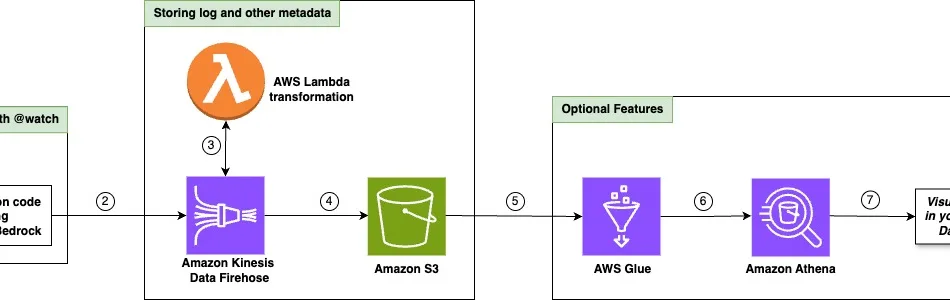
Empower your generative AI application with a comprehensive custom observability solution

Recently, we’ve been witnessing the rapid development and evolution of generative AI applications, with observability and evaluation emerging as critical aspects for developers, data scientists, and stakeholders. Observability refers to the ability to understand the internal state and behavior of a system by analyzing its outputs, logs, and metrics. Evaluation, on the other hand, involves …

image1 M2Eyluf

Gemini models are coming to GitHub Copilot

Today, we’re announcing that GitHub will make Gemini models – starting with Gemini 1.5 Pro – available to developers on its platform for the first time through a new partnership with Google Cloud. Developers value flexibility and control in choosing the best model suited to their needs — and this partnership shows that the next …

A navigation system for microswimmers

By applying an electric field, the movement of microswimmers can be manipulated. Scientists describe the underlying physical principles by comparing experiments and theoretical modeling predictions. They are able to tune the direction and mode of motion through a microchannel between oscillation, wall adherence and centerline orientation, enabling different interactions with the environment.

Promoting Cross-Modal Representations to Improve Multimodal Foundation Models for Physiological Signals

Many healthcare applications are inherently multimodal, involving several physiological signals. As sensors for these signals become more common, improving machine learning methods for multimodal healthcare data is crucial. Pretraining foundation models is a promising avenue for success. However, methods for developing foundation models in healthcare are still in early exploration and it is unclear which …

ML 17168 Image 1 Solution Architecture Diagram

Import data from Google Cloud Platform BigQuery for no-code machine learning with Amazon SageMaker Canvas

In the modern, cloud-centric business landscape, data is often scattered across numerous clouds and on-site systems. This fragmentation can complicate efforts by organizations to consolidate and analyze data for their machine learning (ML) initiatives. This post presents an architectural approach to extract data from different cloud environments, such as Google Cloud Platform (GCP) BigQuery, without …