ML 20213 1 1

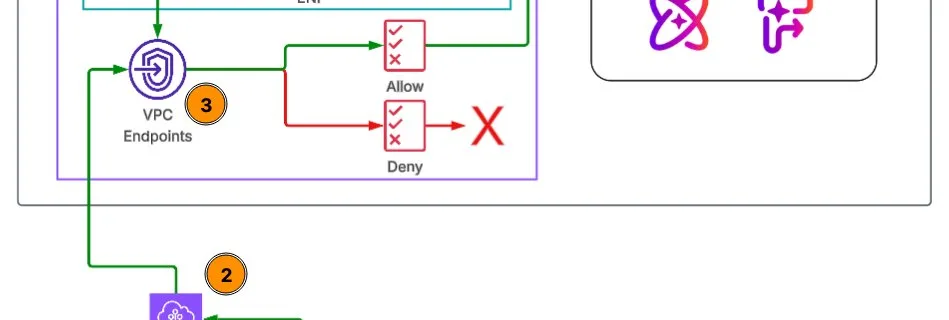
Securing Quick access from corporate networks with AWS PrivateLink

When enterprise data sits behind a corporate firewall or in a private on-premises data center, there’s no direct network path from AWS, even though the AI agents and dashboards in Amazon Quick can query virtually any data source. Administrators must make sure their sensitive enterprise data isn’t exposed to the public internet while being accessible …

Google Cloud expands model choice and flexibility, bringing OpenAI models to customers

Google Cloud has always been defined by choice, enterprise-grade governance, and market-leading price-performance. Key to the foundation of openness and choice is giving customers flexibility to run agentic workloads across their choice of models and infrastructure to achieve the right balance of cost, capability, and performance. Today, we are expanding that foundation by launching OpenAI …

ML 21817 1

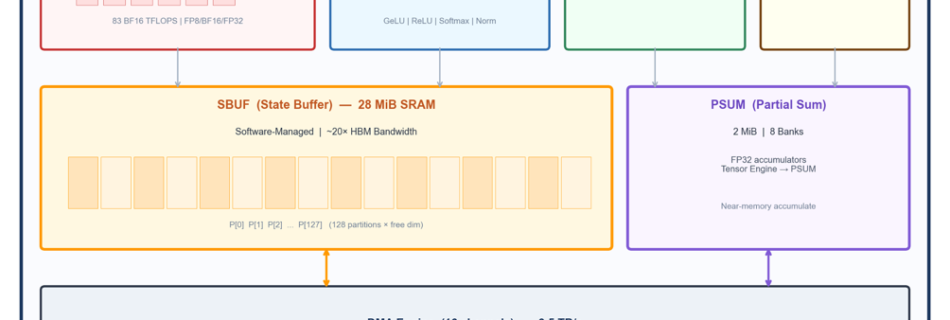
Beyond the KV cache: Training and serving i14’s Laplace 3B linear attention model on AWS Trainium2 with native PyTorch

Most large language models (LLMs) use transformer architectures with softmax attention. During inference, their key-value (KV) cache grows with the conversation or document context. This can reduce concurrency, increase serving cost, and force agentic applications to discard useful history. i14 designed Laplace 3B as a linear attention alternative. Its recurrent state stays at 29.5 MB …

Claude Opus 5.5 and Claude Sonnet 5.5 are now available in Google Antigravity

Whether you are iterating on a quick bug fix or planning a complex migration, different tasks call for different models. In keeping with Google Cloud’s commitment to an open ecosystem and to give developers the right model for every job, Claude Opus 5.5 and Claude Sonnet 5.5 are now available in Google Antigravity for Google …

Brain-inspired randomness makes artificial vision more reliable

Humans are usually remarkably good at recognizing objects, even under poor conditions. Artificial vision systems, by contrast, reach their limits more quickly. Researchers at the Hertie Institute for Clinical Brain Research have now investigated what artificial vision systems can learn from the brain. They found that combining two brain-inspired features can make image recognition considerably …