RISED: Rubrics for Agentic Multi-Environment Selection and Self-Distillation

Training a single LLM agent jointly across diverse interactive environments has attracted increasing attention as a route to generalist agents. Existing curriculum and data-selection strategies often allocate training at the environment level or prioritize local reward-based signals, without explicitly considering relationships between current rollouts across environments for prompt-group selection. Meanwhile, as environments are learned at …

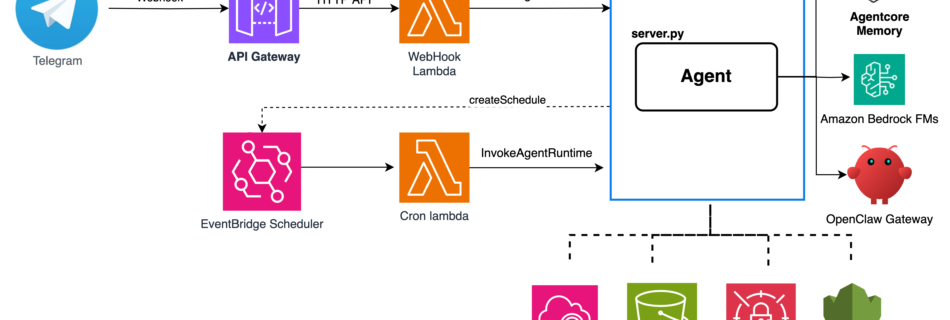
ml21227 drawio

Building a context-aware AI assistant on AgentCore and OpenClaw

Off-the-shelf AI assistants answer individual questions well, but they fall short on a different axis: continuity. Ask a stateless assistant about your garden today and it has no idea that you mentioned your fast-draining raised beds three weeks ago, that you only use organic fertilizer, or that your petunias were struggling through a heat wave. …

From 3D layout to compositing: new LTX VFX tools

During VFX Week last week, we released seven open-weight capabilities for LTX-2.5, covering high-res editing, restoration, HDR, CG-guided generation and compositing: Native Resolution: Run AI edits on 4K and 8K plates and beyond without downscaling. Overlapping tiles keep fine detail, on a single GPU. Refine: Refine generates the fine detail a standard resize leaves soft, …

Negotiating Ontological Boundaries in User-Authored Personal Sensing Systems

Designed artifacts are ontological, shaping, and at times limiting, what becomes possible or imaginable. One path toward mitigating such foreclosures is giving people power over how systems are designed and built. Despite decades of scholarship around systems that enable such authorship, these systems are often evaluated on whether or not they are usable, useful, or …

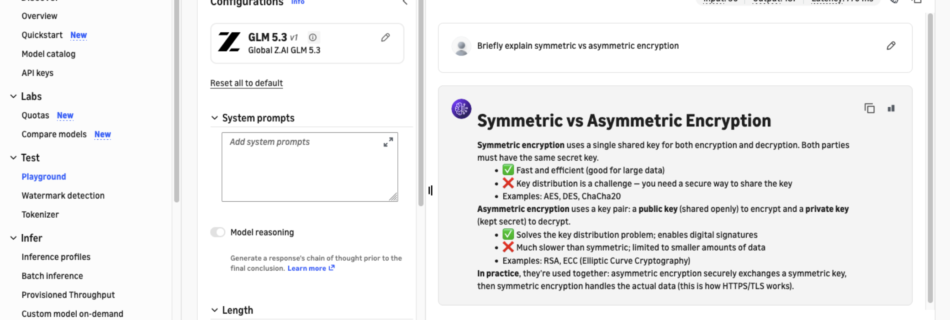
Screenshot 2026 10 05 at 61123PM

Introducing GLM 5.3 on Amazon Bedrock

Coding and agentic workloads are asking more of AI models than ever: refactor a repository spanning hundreds of files, sustain a multi-hour agentic workflow without losing context, and reason through complex systems problems with tool use at every step. Meeting those demands with open-weight models has historically meant provisioning and operating your own inference infrastructure. …