K-Means Clustering for Image Classification Using OpenCV

In a previous tutorial, we have explored the use of the k-means clustering algorithm as an unsupervised machine learning technique that seeks to group similar data into distinct clusters, to uncover patterns in the data.  We have, so far, seen how to apply the k-means clustering algorithm to a simple two-dimensional dataset containing distinct clusters, …

02A28EIuCrpOJGrlTdM

It’s Happening! Chatbot Conference is Hours Away– Don’t Miss Out!

Hey Friend The moment we’ve all been waiting for is almost upon us! The Chatbot Conference kicks off tomorrow, November 1st! As we’re gearing up for an electrifying day, here’s a quick reminder of the transformative sessions awaiting you: The New Web: Discover how Conversational AI is reshaping SERPs and websites. Knowledge Bases & Vector Databases: Understand …

Leveraging IBM Cloud for electronic design automation (EDA) workloads

Electronic design automation (EDA) is a market segment consisting of software, hardware and services with the goal of assisting in the definition, planning, design, implementation, verification and subsequent manufacturing of semiconductor devices (or chips). The primary providers of this service are semiconductor foundries or fabs. While EDA solutions are not directly involved in the manufacture …

Picture1 9

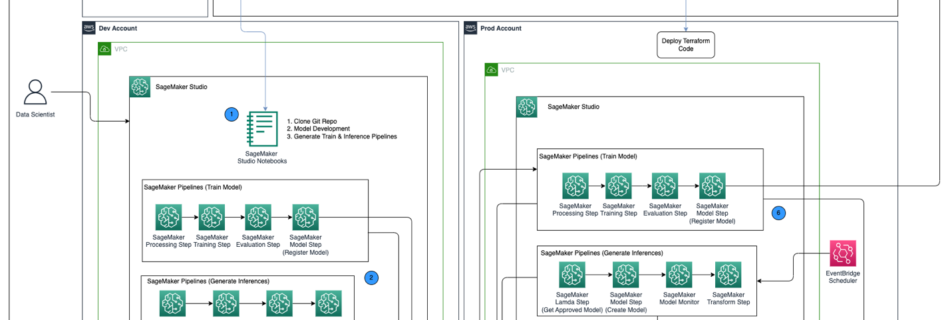
Schneider Electric leverages Retrieval Augmented LLMs on SageMaker to ensure real-time updates in their ERP systems

This post was co-written with Anthony Medeiros, Manager of Solutions Engineering and Architecture for North America Artificial Intelligence, and Blake Santschi, Business Intelligence Manager, from Schneider Electric. Additional Schneider Electric experts include Jesse Miller, Somik Chowdhury, Shaswat Babhulgaonkar, David Watkins, Mark Carlson and Barbara Sleczkowski.  Enterprise Resource Planning (ERP) systems are used by companies to …

Study identifies human–AI interaction scenarios that lead to information cocoons

The widespread use of AI algorithms, particularly algorithms designed to recommend content and products to users based on their previous activity online, has led to the rise of new phenomena known as social media echo chambers and information cocoons. These phenomena pose limitations in the information presented to users online, prompting them to only read …