pip2pix marble Terminator
submitted by /u/Zero-One-One-Zero [link] [comments]
submitted by /u/Zero-One-One-Zero [link] [comments]
The most popular deep learning libraries in Python for research and development are TensorFlow/Keras and PyTorch, due to their simplicity. The scikit-learn library, however, is the most popular library for general machine learning in Python. In this post, you will discover how to use deep learning models from PyTorch with the scikit-learn library in Python. …
Read more “Use PyTorch Deep Learning Models with scikit-learn”

Editors Note: The following is a collaboration between authors from Palantir’s Product Development and Privacy & Civil Liberties (PCL) teams. It outlines how our latest model management capabilities incorporate the principles of responsible artificial intelligence so that Palantir Foundry users can effectively solve their most challenging problems. At Palantir, we’re proud to build mission-critical software …
Responsibility is a learned behavior. Over time we connect the dots, understanding the need to meet societal expectations, comply with rules and laws, and to respect the rights of others. We see the link between responsibility, accountability and subsequent rewards. When we act responsibly, the rewards are positive; when we don’t, we can face negative …
Read more “3 key reasons why your organization needs Responsible AI”
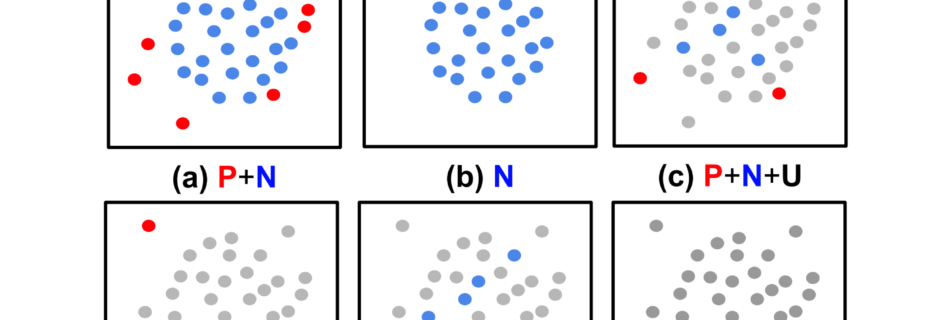
Posted by Jinsung Yoon and Sercan O. Arik, Research Scientists, Google Research, Cloud AI Team Anomaly detection (AD), the task of distinguishing anomalies from normal data, plays a vital role in many real-world applications, such as detecting faulty products from vision sensors in manufacturing, fraudulent behaviors in financial transactions, or network security threats. Depending on …
Read more “Unsupervised and semi-supervised anomaly detection with data-centric ML”
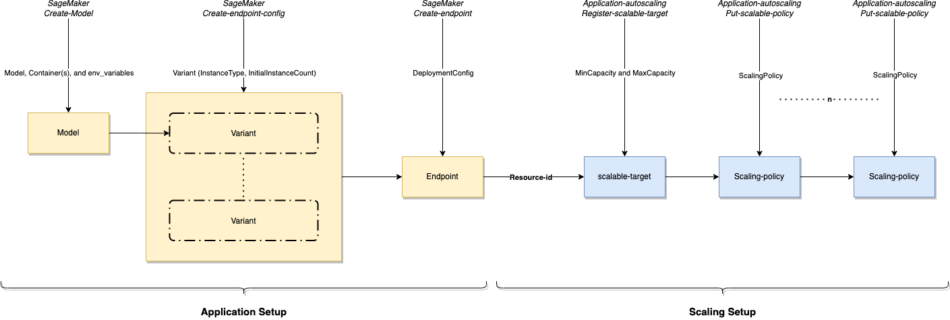
Machine learning (ML) has become ubiquitous. Our customers are employing ML in every aspect of their business, including the products and services they build, and for drawing insights about their customers. To build an ML-based application, you have to first build the ML model that serves your business requirement. Building ML models involves preparing the …
Read more “Optimize your machine learning deployments with auto scaling on Amazon SageMaker”
The new large language model (LLM)-driven chatbots could significantly improve customer experience (CX), according to veterans in the field.Read More
Biden’s speech calling for better data protections got a standing ovation from both sides of the aisle. So, where’s a federal privacy law?
Artificially intelligent neural networks, trained by images and videos available on the internet, can recognize faces, objects, and more. But there’s a serious drawback. Teaching machine learning algorithms how to identify people or items by relying solely on the visual library of faces and objects found online underrepresents socioeconomic and demographic groups.
submitted by /u/mk_ultra_violence [link] [comments]