Meta Goes Even Harder Into Smart Glasses With 3 New Models
New glasses with a built-in display bring Meta’s vision of the augmented reality future into focus. The popular Ray-Bans also get an update, and there’s a new Oakley style for action sports.
New glasses with a built-in display bring Meta’s vision of the augmented reality future into focus. The popular Ray-Bans also get an update, and there’s a new Oakley style for action sports.
What if we could get clean electricity more cheaply and protect the environment at the same time? A team of researchers in Korea has presented a roadmap for sustainable solar cells that integrates AI technology to bring this future closer. Their study is published in Green Chemistry and was selected as the cover of the …
Read more “AI brings perovskite solar cells closer to sustainable commercialization”

I took everyone’s feedback and whipped up a much better version of the pose transfer lora. You should see a huge improvement without needing to mannequinize the image before hand. There should be much less extra transfer (though it’s still there occasionally). The only thing still not amazing is it’s cartoon pose understanding but I’ll …
Numerical computations in Python become much faster and more efficient with

Correcting the Record: Response to the September 15, 2025 American Conservative Article on Palantir Editor’s Note: This blog post responds to allegations published by the American Conservative questioning Palantir’s commitment to privacy and civil liberties. We believe it’s important to address misconceptions about our technology and business practices with transparency and factual accuracy. The American Conservative …
Read more “Correcting the Record: Response to the Recent American Conservative Article on Palantir”
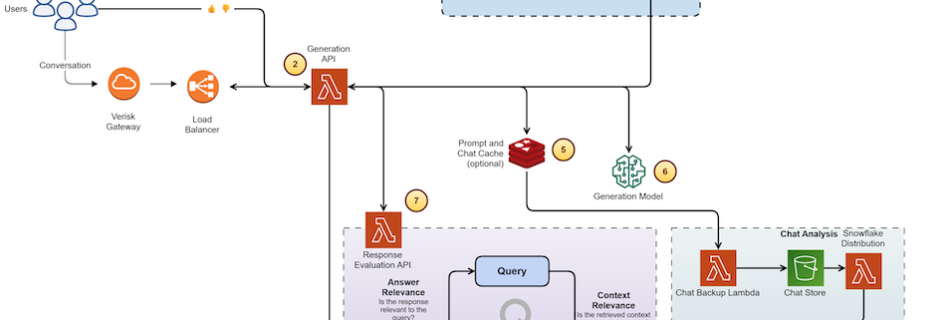
This post is co-written with Samit Verma, Eusha Rizvi, Manmeet Singh, Troy Smith, and Corey Finley from Verisk. Verisk Rating Insights as a feature of ISO Electronic Rating Content (ERC) is a powerful tool designed to provide summaries of ISO Rating changes between two releases. Traditionally, extracting specific filing information or identifying differences across multiple …
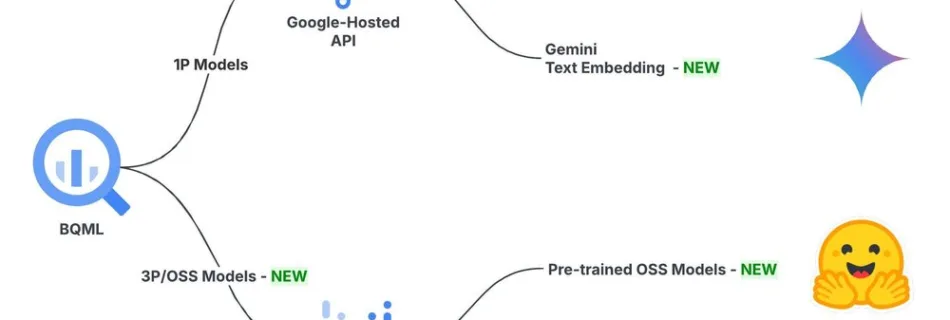
High-quality text embeddings are the engine for modern AI applications like semantic search, classification, and retrieval-augmented generation (RAG). But when it comes to picking a model to generate these embeddings, we know one size doesn’t fit all. Some use cases demand state-of-the-art quality, while others prioritize cost, speed, or compatibility with the open-source ecosystem. To …
Read more “Gemini and OSS text embeddings are now in BigQuery ML”
The cheapest path into macOS is cheaper than normal today, thanks to this sale.
When researchers are building large language models (LLMs), they aim to maximize performance under a particular computational and financial budget. Since training a model can amount to millions of dollars, developers need to be judicious with cost-impacting decisions about, for instance, the model architecture, optimizers, and training datasets before committing to a model.
submitted by /u/JackKerawock [link] [comments]