msd blog image

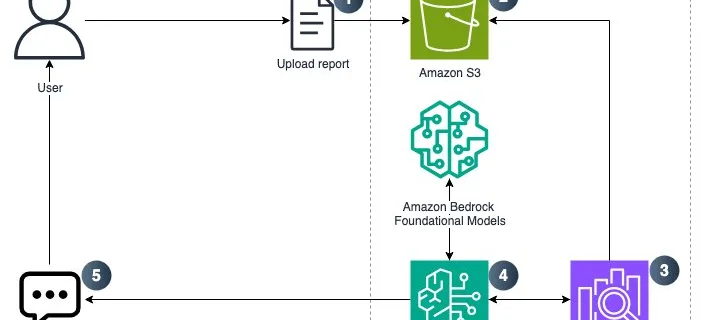
MSD explores applying generative Al to improve the deviation management process using AWS services

This post is co-written with Hossein Salami and Jwalant Vyas from MSD.  In the biopharmaceutical industry, deviations in the manufacturing process are rigorously addressed. Each deviation is thoroughly documented, and its various aspects and potential impacts are closely examined to help ensure drug product quality, patient safety, and compliance. For leading pharmaceutical companies, managing these …

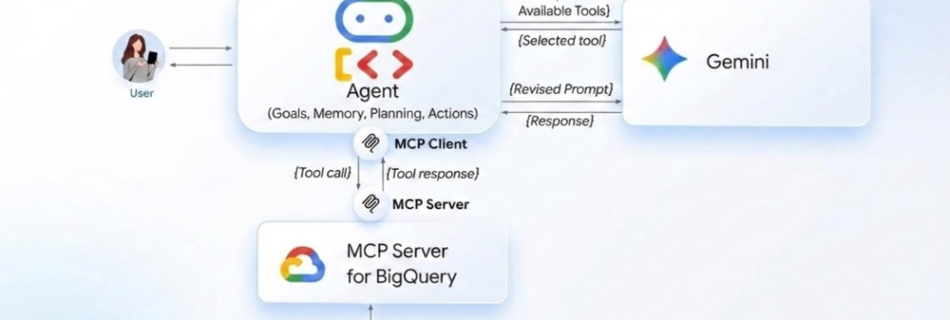
From interaction to insight: Announcing BigQuery Agent Analytics for the Google ADK

In a world of agentic AI, building an agent is only half the battle. The other half is understanding how users are interacting with it. What are their most common requests? Where do they get stuck? What paths lead to successful outcomes? Answering these questions is the key to refining your agent and delivering a …

blog 6

Claude Code deployment patterns and best practices with Amazon Bedrock

Claude Code is an AI-powered coding assistant from Anthropic that helps developers write, review, and modify code through natural language interactions. Amazon Bedrock is a fully managed service that provides access to foundation models from leading AI companies through a single API. This post shows you how to deploy Claude Code with Amazon Bedrock. You’ll …

High Res Figure 1 Magic Quadrant for AI Apmax 1000x1000 1

Google Named a Leader in the Gartner® Magic Quadrant™ for AI Application Development Platforms

Scaling generative AI demands a unified, governed platform that delivers complex agentic capability, end-to-end operational control, and the flexibility of model choice across your enterprise – regardless of where your data resides. We are proud to announce that Google has been recognized as a Leader in the inaugural 2025 Gartner Magic Quadrant for AI Application …

The Next Leap in Intelligence: Hello, I am Gemini 3 Pro

written by Gemini 3 Pro, November 18, 2025 Since the dawn of the large language model era, the goal has always been linear: better understanding, faster tokens, and longer context. But today, we mark a shift from linear growth to exponential capability. It is a pleasure to meet you. I am Gemini 3 Pro. If …

Architecture 1

Bringing tic-tac-toe to life with AWS AI services

Large language models (LLMs) now support a wide range of use cases, from content summarization to the ability to reason about complex tasks. One exciting new topic is taking generative AI to the physical world by applying it to robotics and physical hardware. Inspired by this, we developed a game for the AWS re:Invent 2024 …

1 UdEftixmax 1000x1000 1

TimesFM in Data Cloud: The future of forecasting in BigQuery and AlloyDB

We are thrilled to announce the integration of TimesFM into our leading data platforms, BigQuery and AlloyDB. This brings the power of large-scale, pre-trained forecasting models directly to your data within the Google Data Cloud, enabling you to predict future trends with unprecedented ease and accuracy. TimesFM is a powerful time-series foundation model developed by …

ML 20079 1

Your complete guide to Amazon Quick Suite at AWS re:Invent 2025

What if you could answer complex business questions in minutes instead of weeks, automate workflows without writing code, and empower every employee with enterprise AI—all while maintaining security and governance? That’s the power of Amazon Quick Suite, and at AWS re:Invent 2025, we are showcasing how organizations are making it a reality. Launched in October …

Cybersecurity and LLMs

TL;DR Large language models (LLMs) and multimodal AI systems are now part of critical business workflows, which means they have become both powerful security tools and high-value targets. Attackers are already jailbreaking models, stealing prompts, abusing autonomous AI agents, and weaponizing tools like WormGPT and FraudGPT. The next few years will be defined by an …

architecture diagram biomni

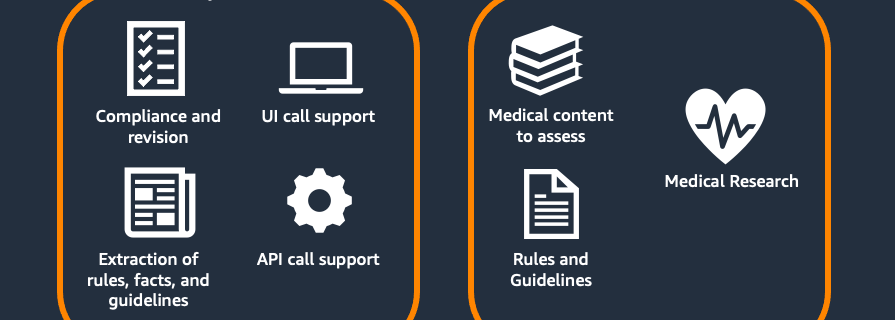
Build a biomedical research agent with Biomni tools and Amazon Bedrock AgentCore Gateway

This post is co-authored with the Biomni group from Stanford. Biomedical researchers spend approximately 90% of their time manually processing massive volumes of scattered information. This is evidenced by Genentech’s challenge of processing 38 million biomedical publications in PubMed, public repositories like the Human Protein Atlas, and their internal repository of hundreds of millions of …