Figure 1 MCP blogmax 1000x1000 1

How to build production-ready AI agents with Google-managed MCP servers

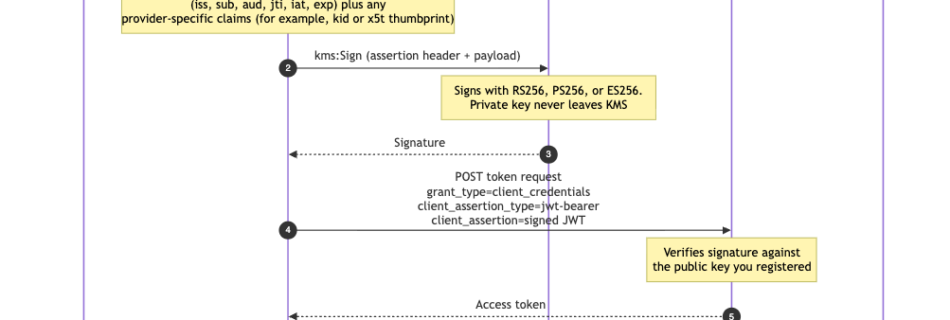
As ​​developers build AI agents with more sophisticated reasoning systems, they require higher-quality fuel–in the form of enterprise data and specialized tools–to drive real business value. To get the most out of that octane-rich mix, we offer Google-managed model context protocol (MCP) servers:  an engine purpose-built for AI agents to interact securely with Google and …

Drop-In Perceptual Optimization for 3D Gaussian Splatting

Despite their output being ultimately consumed by human viewers, 3D Gaussian Splatting (3DGS) methods often rely on ad-hoc combinations of pixel-level losses, resulting in blurry renderings. To address this, we systematically explore perceptual optimization strategies for 3DGS by searching over a diverse set of distortion losses. We conduct the first-of-its-kind large-scale human subjective study on …

1D JdMJHdLBrmLCtmAR0tCw

Frontend Engineering at Palantir: Redefining Real-Time Map Collaboration

How we built lightweight, real-time map collaboration for teams operating at the edge. About This Series Frontend engineering at Palantir goes far beyond building standard web apps. Our engineers design interfaces for mission-critical decision-making, build operational applications that translate insight to action, and create systems that handle massive datasets — thinking not just about what the user needs, but …

Zohreh Norouz

Run Generative AI inference with Amazon Bedrock in Asia Pacific (New Zealand)

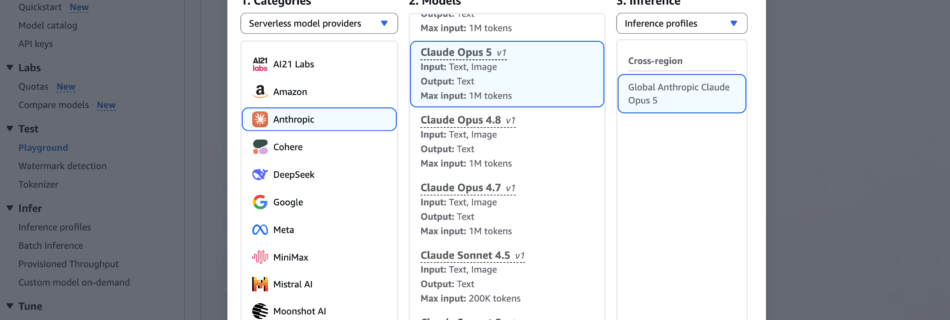
Kia ora! Customers in New Zealand have been asking for access to foundation models (FMs) on Amazon Bedrock from their local AWS Region. Today, we’re excited to announce that Amazon Bedrock is now available in the Asia Pacific (New Zealand) Region (ap-southeast-6). Customers in New Zealand can now access Anthropic Claude models (Claude Opus 4.5, …

The new AI literacy: Insights from student developers

AI has made it easier than ever for student developers to work efficiently, tackle harder problems, and pursue ambitious projects. But for students earning technical degrees, these new capabilities also create genuine tensions around learning.  How much should I use AI? What should I use it for?  As 90% of technology professionals now use AI …

Exclusive Self Attention

We introduce exclusive self attention (XSA), a simple modification of self attention (SA) that improves Transformer’s sequence modeling performance. The key idea is to constrain attention to capture only information orthogonal to the token’s own value vector (thus excluding information of self position), encouraging better context modeling. Evaluated on the standard language modeling task, XSA …

ml 20634 image 1

Unlocking video insights at scale with Amazon Bedrock multimodal models

Video content is now everywhere, from security surveillance and media production to social platforms and enterprise communications. However, extracting meaningful insights from large volumes of video remains a major challenge. Organizations need solutions that can understand not only what appears in a video, but also the context, narrative, and underlying meaning of the content. In …

DRA Blog Diagrammax 1000x1000 1

DRA: A new era of Kubernetes device management with Dynamic Resource Allocation

The explosion of large language models (LLMs) has increased demand for high-performance accelerators like GPUs and TPUs. As organizations scale their AI capabilities, the scarcity of compute resources is sometimes the primary bottleneck. Efficiently managing every GPU and TPU cycle is no longer just a recommendation — it’s an operational necessity. Kubernetes is becoming the …

AI-powered robot learns how to harvest tomatoes more efficiently

A new tomato-picking robot is learning to think before it acts. Instead of simply identifying ripe fruit, it predicts how easy each tomato will be to harvest and adjusts its approach accordingly. This smarter strategy boosted success rates to 81%, with the robot even switching angles when needed. The breakthrough could pave the way for …

Trained on Tokens, Calibrated on Concepts: The Emergence of Semantic Calibration in LLMs

Large Language Models (LLMs) often lack meaningful confidence estimates for their outputs. While base LLMs are known to exhibit next-token calibration, it remains unclear whether they can assess confidence in the actual meaning of their responses beyond the token level. We find that, when using a certain sampling-based notion of semantic calibration, base LLMs are …