Did an AI Music App Just Snitch on the Song of the Summer?
Fenix Flexin’s hit song “Rubberz” has hip-hop fans arguing over whether it was generated by AI. Some say they have proof it’s machine-made, but will anyone care?
Fenix Flexin’s hit song “Rubberz” has hip-hop fans arguing over whether it was generated by AI. Some say they have proof it’s machine-made, but will anyone care?
Some physical injuries and neurological conditions can temporarily or permanently impair movement, leaving some people unable to speak, type on keyboards or use electronic devices. Brain-computer interfaces (BCIs), systems that can decode brain activity patterns and convert them into computer commands or written text, could be of great value for paralyzed patients.
Upgrade your WFH setup and work in style with these comfy, WIRED-tested seats.
Multimodal large language models (MLLMs), which process multiple types of sensory information, such as text, images and audio, at the same time, are rapidly expanding the range of applications for artificial intelligence (AI). However, in real-world environments, these models can misinterpret the physical characteristics of sensors, mistakenly identify objects or claim to hear sounds that …
Read more “AI reduces sensory hallucinations, even at night or in smoke”
by Aarti Laddha, Richard Diaz-Cool, Rishika Idnani, Venkatesh Selveraj Netflix supports a vast and evolving set of features and content types, ranging from 4K streaming and immersive audio to live streaming and cloud gaming, across a diverse ecosystem of devices. However, not all devices are created equal. Hardware limitations such as available RAM, CPU cores, …
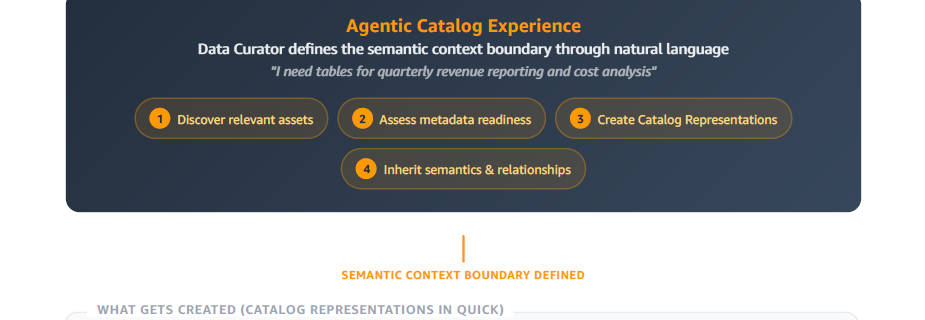
As organizations embrace AI-powered analytics, the value of a natural language (Text2SQL) answer is only as good as the business context behind it. We’re entering a phase where semantic richness (table and column descriptions, and relationships) must flow directly from where it’s authored in upstream data catalogs and semantic tools into the AI products that …
Read more “Announcing the Agentic Catalog Experience in Amazon Quick”
At Google, AI is a soup-to-nuts endeavor. Obviously, we make leading AI models like Gemini and Nano Banana. We incorporate AI into the tools you use every day (think Gmail, BigQuery, AlloyDB, Google Cloud Code and Google Cloud Assist). We make software frameworks to help you build with AI, like Gemini Enterprise Agent Platform, JAX, …
Read more “What’s new in AI infrastructure and orchestration this month”
The impact will kick up a plume of debris so high, it’ll likely be visible through some telescopes. Astronomers will be watching.
In this article, you will learn the seven architectural components that separate a production-grade agentic AI system from a demo script, and how each one…
While UMAP is widely used for exploring high-dimensional data, typical workflows focus on its lower-dimensional embedding, largely overlooking the rich k-nearest-neighbor (kNN) graph that UMAP constructs internally. This graph encodes the data manifold in its original high-dimensional space, before the distortion that UMAP’s 2D projection introduces. We demonstrate the untapped potential of this internal representation, …
Read more “Dimensionality Reduction Meets Network Science: Sensemaking on UMAP’s kNN Graph”