Rabbit R1 Review: Skip This AI-Powered Hardware Assistant
You probably shouldn’t follow this rabbit down the rabbit hole.
You probably shouldn’t follow this rabbit down the rabbit hole.
A stretchy electronic skin could equip robots and other devices with the same softness and touch sensitivity as human skin, opening up new possibilities to perform tasks that require a great deal of precision and control of force.
Contrastive learning typically matches pairs of related views among a number of unrelated negative views. Views can be generated (e.g. by augmentations) or be observed. We investigate matching when there are more than two related views which we call poly-view tasks, and derive new representation learning objectives using information maximization and sufficient statistics. We show …
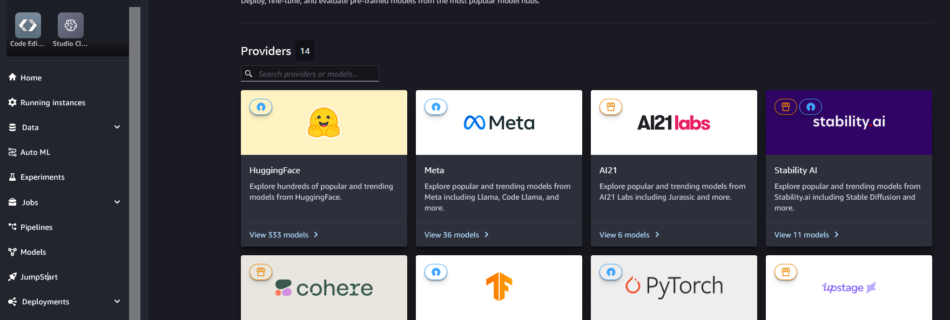
Today, we’re excited to announce the availability of Meta Llama 3 inference on AWS Trainium and AWS Inferentia based instances in Amazon SageMaker JumpStart. The Meta Llama 3 models are a collection of pre-trained and fine-tuned generative text models. Amazon Elastic Compute Cloud (Amazon EC2) Trn1 and Inf2 instances, powered by AWS Trainium and AWS …
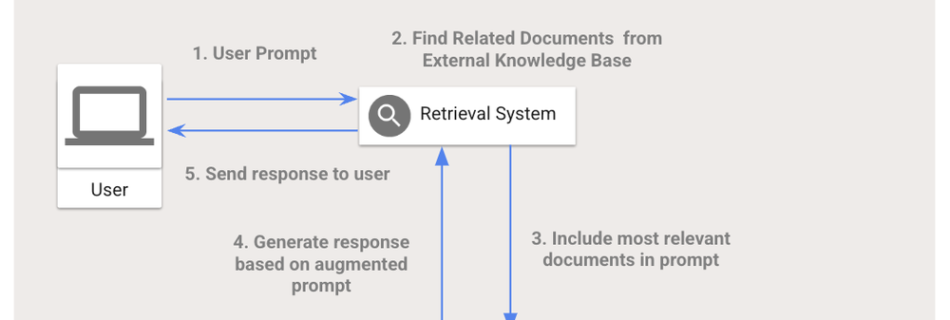
We’re excited to announce the release of a quickstart solution and reference architecture for retrieval augmented generation (RAG) applications, designed to accelerate your journey to production. In this post, you’ll learn how to quickly deploy a complete RAG application on Google Kubernetes Engine (GKE), and Cloud SQL for PostgreSQL and pgvector, using Ray, LangChain, and …
Read more “RAG in production faster with Ray, LangChain and HuggingFace”
Harnessing optimized AI models for healthcare is easier than ever as NVIDIA NIM, a collection of cloud-native microservices, integrates with Amazon Web Services. NIM, part of the NVIDIA AI Enterprise software platform available on AWS Marketplace, enables developers to access a growing library of AI models through industry-standard application programming interfaces, or APIs. The library …
Read more “NVIDIA AI Microservices for Drug Discovery, Digital Health Now Integrated With AWS”
A US judge who will decide Google’s fate in a historic antitrust trial suggested it was “odd” for the company to say it has the best search engine but also pay Apple billions to lock out rivals.
New algorithm encourages robots to move more randomly to collect more diverse data for learning. In tests, robots started with no knowledge and then learned and correctly performed tasks within a single attempt. New model could improve safety and practicality of self-driving cars, delivery drones and more.
Artificial intelligence may soon help to identify lies and deception. However, a research team from the Universities of Marburg and Würzburg warns against premature use.
We investigate the capabilities of transformer models on relational reasoning tasks. In these tasks, models are trained on a set of strings encoding abstract relations, and are then tested out-of-distribution on data that contains symbols that did not appear in the training dataset. We prove that for any relational reasoning task in a large family …
Read more “When can transformers reason with abstract symbols?”