DDPforFL

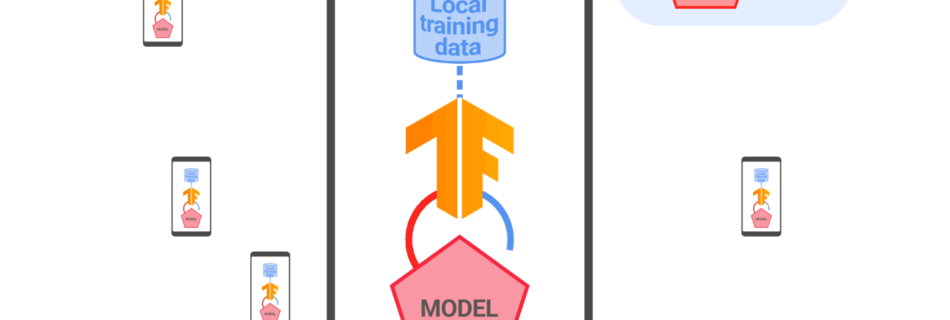
Distributed differential privacy for federated learning

Posted by Florian Hartmann, Software Engineer, and Peter Kairouz, Research Scientist, Google Research Federated learning is a distributed way of training machine learning (ML) models where data is locally processed and only focused model updates and metrics that are intended for immediate aggregation are shared with a server that orchestrates training. This allows the training …

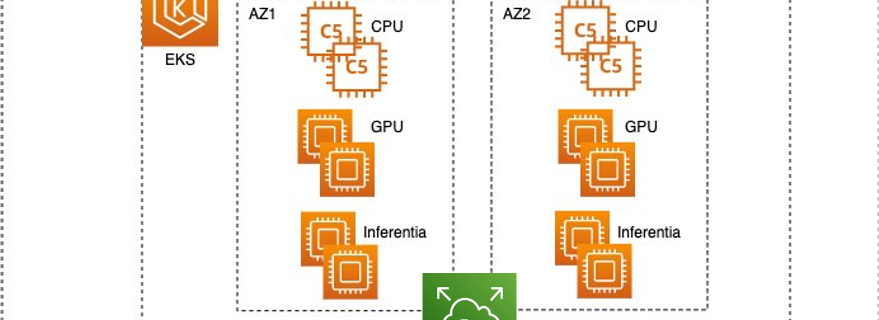
Architecture 1

Accelerate hyperparameter grid search for sentiment analysis with BERT models using Weights & Biases, Amazon EKS, and TorchElastic

Financial market participants are faced with an overload of information that influences their decisions, and sentiment analysis stands out as a useful tool to help separate out the relevant and meaningful facts and figures. However, the same piece of news can have a positive or negative impact on stock prices, which presents a challenge for …

Integrating humans with AI in structural design

Modern fabrication tools such as 3D printers can make structural materials in shapes that would have been difficult or impossible using conventional tools. Meanwhile, new generative design systems can take great advantage of this flexibility to create innovative designs for parts of a new building, car, or virtually any other device.

KTN2520hero

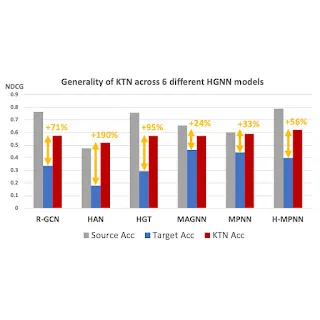
Teaching old labels new tricks in heterogeneous graphs

Posted by Minji Yoon, Research Intern, and Bryan Perozzi, Research Scientist, Google Research, Graph Mining Team Industrial applications of machine learning are commonly composed of various items that have differing data modalities or feature distributions. Heterogeneous graphs (HGs) offer a unified view of these multimodal data systems by defining multiple types of nodes (for each …

solution arch blog

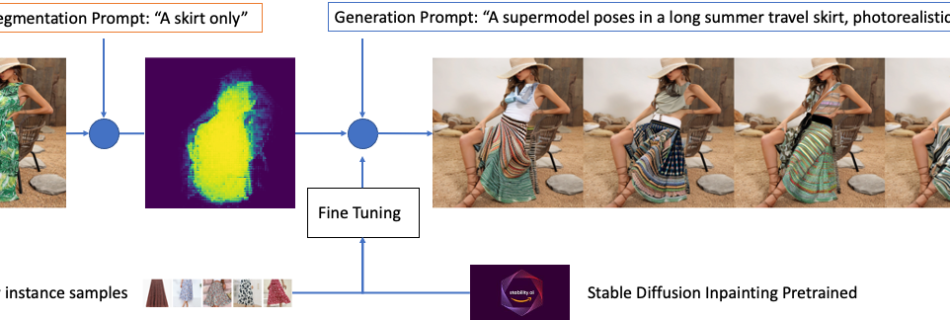
Virtual fashion styling with generative AI using Amazon SageMaker 

The fashion industry is a highly lucrative business, with an estimated value of $2.1 trillion by 2025, as reported by the World Bank. This field encompasses a diverse range of segments, such as the creation, manufacture, distribution, and sales of clothing, shoes, and accessories. The industry is in a constant state of change, with new …