Literary Prizewinners Are Facing AI Allegations. It Feels Like the New Normal
Three of five regional winners of the prestigious Commonwealth Short Story Prize are suspected of relying on chatbots. They’re certainly not alone.
Three of five regional winners of the prestigious Commonwealth Short Story Prize are suspected of relying on chatbots. They’re certainly not alone.
Researchers at Penn have created a hybrid light-matter particle that could dramatically speed up AI computing while using far less energy. The breakthrough may help replace some electronic computing processes with ultra-efficient light-based technology.
A new University of California San Diego study unveils the first empirical evidence that a modern artificial intelligence system can pass the Turing test—a major scientific benchmark that asks whether a machine can imitate human conversation so convincingly that people can’t reliably tell it apart from a real person. In a series of experiments, people …
Read more “AI can seem more human than real humans in a classic Turing test”
https://lance-project.github.io/ https://github.com/bytedance/Lance https://huggingface.co/bytedance-research/Lance submitted by /u/HatEducational9965 [link] [comments]
Search works well when users know exactly what they are looking for, but it breaks down when intent is described in natural language.
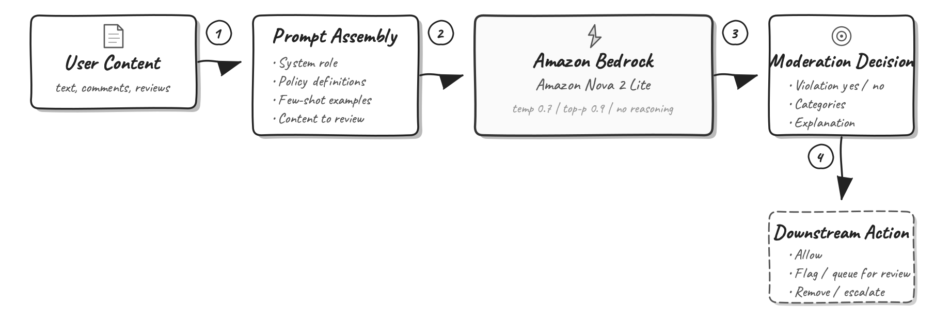
If you moderate user-generated content at scale, you need a system that catches policy violations accurately without over-flagging legitimate posts. A moderation system that misses harmful content puts you at risk, while one that flags too aggressively frustrates your audience. Every organization defines its own policies, so a single classifier rarely works for every use …
We tested some of the most popular automatic dry- and wet-food pet feeders to see which ones are worth the money.
Researchers at Carnegie Mellon University are investigating how humans respond to artificial intelligence agents that sound physically present in the same room, work that could shape the future of audio-only AI systems used in smart glasses, accessibility tools and other screen-free technologies.
NeuralCompanion is an open-source, local-first AI companion project for people who like building, experimenting, and seeing how far personal AI can go on their own hardware. It brings together realtime voice chat, local LLMs, TTS/STT, image generation, interactive tutorials, API-friendly workflows, and a modular addon system into one desktop app designed to be flexible, hackable, …
The Oto Smart Sprinkler makes it easy to keep your lawn watered—as long as it gets three hours a day of direct sun to stay charged.