Agentic Programming: A Roadmap
Here is the number that defines the current state of things:
Here is the number that defines the current state of things:

Today, Amazon SageMaker AI introduces OpenAI-compatible API support for real-time inference endpoints. If you use the OpenAI SDK, LangChain, or Strands Agents, you can now invoke models on SageMaker AI by changing only your endpoint URL. You don’t need a custom client, a SigV4 wrapper, or code rewrites. Overview With this launch, SageMaker AI endpoints …
Read more “Announcing OpenAI-compatible API support for Amazon SageMaker AI endpoints”
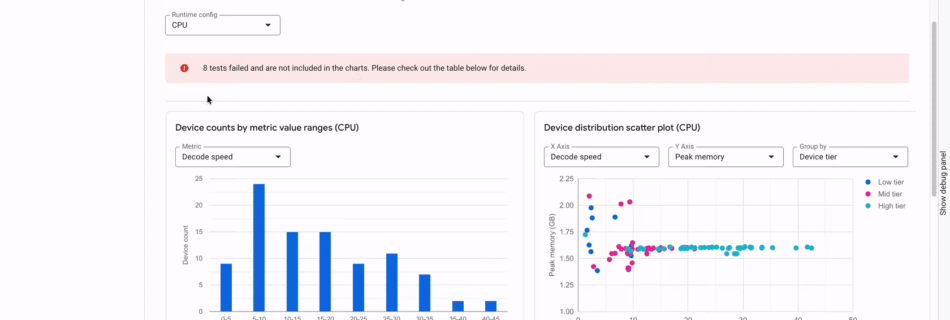
LLMs have become more powerful at smaller sizes, but deploying them to edge devices like smartphones remains a massive challenge. Today, developers have to optimize across a sprawling combination of accelerators, operating systems, and countless System-on-a-Chip (SoC) configurations, often relying on manual testing with just a handful of devices. Google AI Edge Portal helps solve …
Read more “Benchmark and optimize LLMs on-device with AI Edge Portal”
The rocket company has set aside more than $500 million for potential litigation losses, in part to account for complaints alleging that Grok created sexualized images.
Patrick Traynor, Ph.D., has questions. When the professor and interim chair of the University of Florida Department of Computer & Information Science & Engineering saw reports in the media positing that scientific literature is increasingly being generated by artificial intelligence, he wondered, “How do they know?”
Official Link : Nvidia docs NVIDIA RTX 2-Pass Upscaler (4GB VRAM + 8GB RAM) Post: Hi everyone! Recently, while working on AI videos with the LTX2.3 model, I started thinking a lot about upscaling efficiency, so I made my own RTX Upscale node for ComfyUI. In the existing ComfyUI setup, most workflows mainly used Video …
You have probably spent time learning how to prompt AI well.
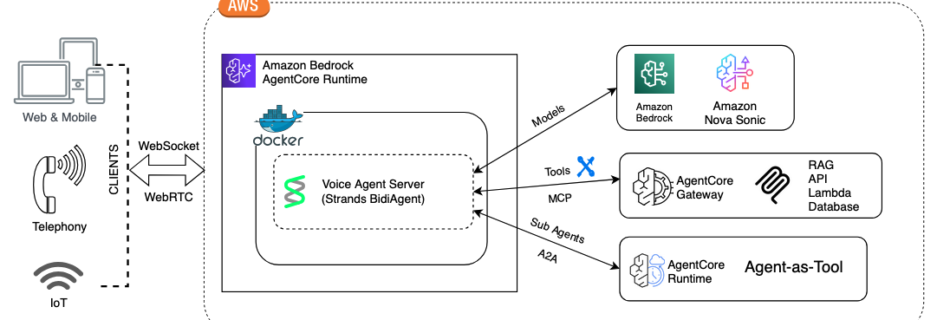
Design patterns for scalable voice agents matter for organizations that need to deliver fast, natural, and reliable voice experiences. Many teams face challenges like high latency, managing real-time audio, and coordinating multiple agents in complex workflows. In this post, you’ll learn how to use Amazon Nova Sonic, Amazon Bedrock AgentCore, and Strands BidiAgent to build …
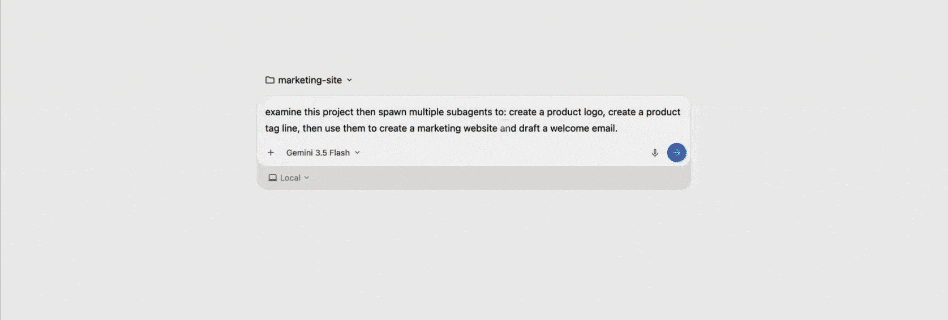
At Google Cloud Next ‘26, we unveiled the blueprint for the Agentic Enterprise, sharing our eighth-generation TPUs, Gemini Enterprise Agent Platform, a fully reimagined Agentic Data Cloud, Workspace Intelligence, and security built for the AI era. Today at Google I/O, we’re delivering a new set of powerful AI innovations and models — and putting them …
Read more “Everything Google Cloud customers need to know coming out of Google I/O”
For a quarter century, the Google search box has been one of the most recognizable interfaces in computing: a thin white rectangle, a blinking cursor, a few typed words, and a list of blue links. On Tuesday, Google will formally retire that paradigm. At its annual I/O developer conference, Google announced a sweeping redesign of …