LLM Observability Tools for Reliable AI Applications
Large language models (LLMs) now power everything from customer service bots to autonomous coding agents.
Large language models (LLMs) now power everything from customer service bots to autonomous coding agents.
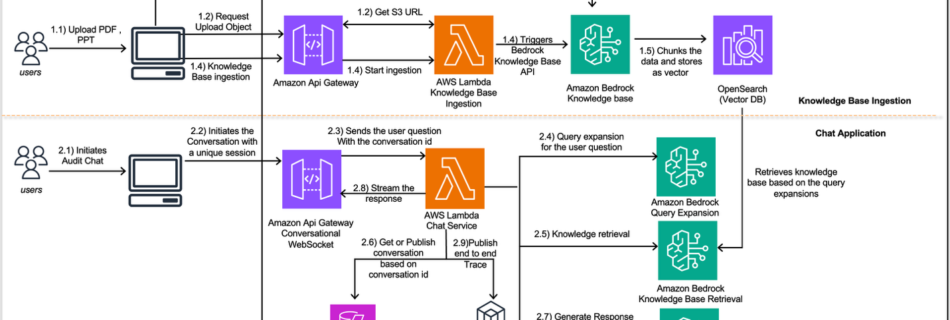
Amazon’s Finance Technology (FinTech) teams build and operate systems for Amazon teams to manage regulatory inquiries in compliance with different jurisdictions. These teams process regulatory inquiries from authorities, each presenting different requirements, document formats, and complexity levels. Processing these regulatory inquiries involves reviewing documentation, extracting relevant information, retrieving supporting data from multiple systems within Amazon’s …
Read more “How Amazon Finance streamlines regulatory inquiries by using generative AI on AWS”
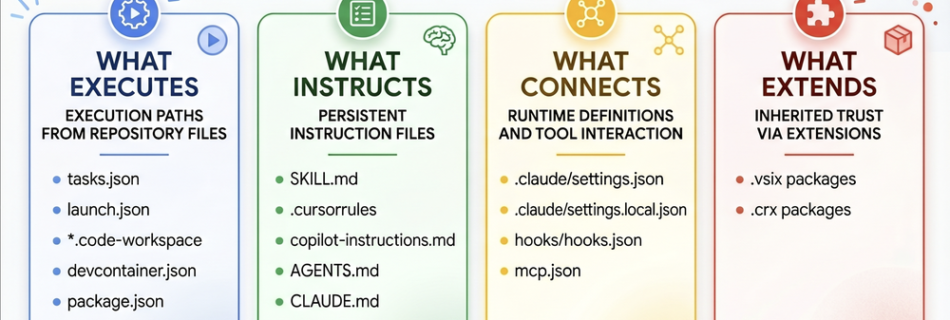
As AI coding agents become deeply embedded in developer workflows, defenders must evolve their definition of malicious files and rethink how to protect against them. Autonomous AI agents operate across integrated development environments (IDEs), editors, terminals, and extension runtimes, and they often have access to local files, command execution, and external services. As a result, …
Read more “Beyond source code: The files AI coding agents trust — and attackers exploit”
Musk’s lawyers questioned Altman over allegations of deception and his network of financial investments, but the OpenAI CEO painted a picture of Musk as obsessed with controlling the company.
A technology that surpasses the limitations of existing sensors, which fail to distinguish between water and asphalt on dark roads, has emerged to enhance the accuracy of autonomous driving and medical diagnostics. A research team has developed a next-generation polarization sensor that can read the direction of light and change its own response.
Listen. I honestly don’t know whether this is just coincidence, a deliberate decision, or simply people overreacting and complaining too much instead of pointing out an obvious problem. Interpret this post however how you like and say whatever you want about it. But how is it that back in 2024 and even early 2025, AI …
Agentic loops in production can be synonymous with high costs, especially when it comes to both LLM and external application usage via APIs, where billing is often closely related to token usage.
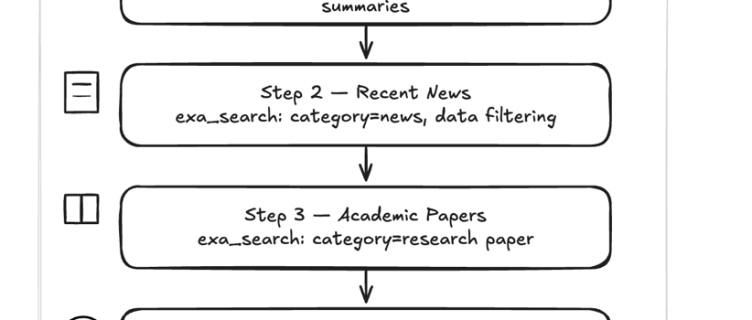
This post is co written by Ishan Goswami and Nitya Sridhar from Exa. If you are building web search-enabled AI agents for research, fact-checking, or competitive intelligence, access to current and reliable information is critical. Most general-purpose search APIs are not designed for agent workflows. They return HTML-heavy pages and short snippets optimized for human …
Read more “Building web search-enabled agents with Strands and Exa”

At Google Cloud Next ’26 we announced Cloud Storage Rapid, a family of object storage capabilities for data-intensive workloads like AI and analytics. Out of the gate, Cloud Storage Rapid consists of Rapid Bucket (formerly Rapid Storage), a high-performance zonal object storage offering, and Rapid Cache (formerly Anywhere Cache), which accelerates reads on-demand and colocates …
Read more “Cloud Storage Rapid: Turbocharged object storage for AI and analytics”
The former OpenAI chief scientist may be estranged from the company, but he still came to its defense as he testified on Monday.