qwen 2.1 is very good upscaler
This test used frames taken from H3 generated videos on 0.3MP on my 6GB VRAM. I don’t know if you can get better faces from distance if you upscale over 2K. submitted by /u/dev_ne [link] [comments]
This test used frames taken from H3 generated videos on 0.3MP on my 6GB VRAM. I don’t know if you can get better faces from distance if you upscale over 2K. submitted by /u/dev_ne [link] [comments]
In this article, you will learn how LLM inference optimization works and which techniques to apply to make language models faster, cheaper, and more reliable…
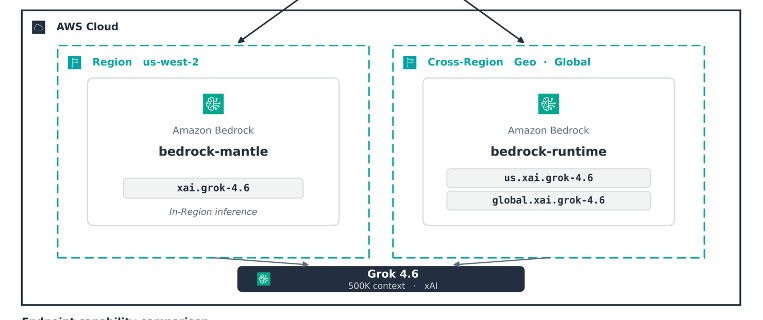
Today, we are announcing that xAI’s Grok 4.6 is available in Amazon Bedrock, adding a frontier model built for long-running agents, coding, and knowledge work to the Bedrock model catalog. Grok 4.6 launched on Bedrock on August 18, 2026. It offers a 500K token context window and supports configurable reasoning effort at four levels: low, …
Read more “xAI’s Grok 4.6 is now available in Amazon Bedrock”
Washington and Beijing have grown ever more linked in the AI boom, making hardware exports and technological restrictions hefty bargaining chips in negotiations.
Digital computing using silicon chips has transformed nearly every aspect of modern life and enabled the remarkable growth of artificial intelligence. But as AI models scale up, that growth comes with increasing demands for energy, water and computing infrastructure.
In exactly two months, it will be 1 year since the release of Nano Banana Pro, and we still don’t have a comparable local model when it comes to editing. Google really nailed its reference capabilities. You send a good face reference to it and it can generate a totally different photo of the person …
Read more “Still wishing on a local editing model that can compete with NBP”
Thermacell LIV 2.0 is expensive and imperfect, but it outperforms nearly every mosquito-control method I’ve tried.
Hey guys! So, I got early access to Qwen Image 2.1, and I did what any sane person would do, generate 200+ “1girl” images (while testing keywords and prompt structures). Here are some amateur-style images that I generated. If you want me to run any of your prompts, just put them in the comments. My …
The Black Friday-ification of the 4th of July: what a decade of email data told us about America’s 250th Though the final numbers aren’t in yet, America’s 250th anniversary is shaping up to have been the most commercially significant Independence Day in the nation’s history. To understand how brands actually approached the holiday – how …
AI labs are toying with an industry-wide pact to slow development. Meanwhile, widely available AI chatbots are already helping uncover a tidal wave of security flaws.