Analyzing the Effect of Linguistic Similarity on Cross-Lingual Transfer: Tasks and Input Representations Matter

Cross-lingual transfer is a popular approach to increase the amount of training data for NLP tasks in a low-resource context. However, the best strategy to decide which cross-lingual data to include is unclear. Prior research often focuses on a small set of languages from a few language families or a single task. It is still …

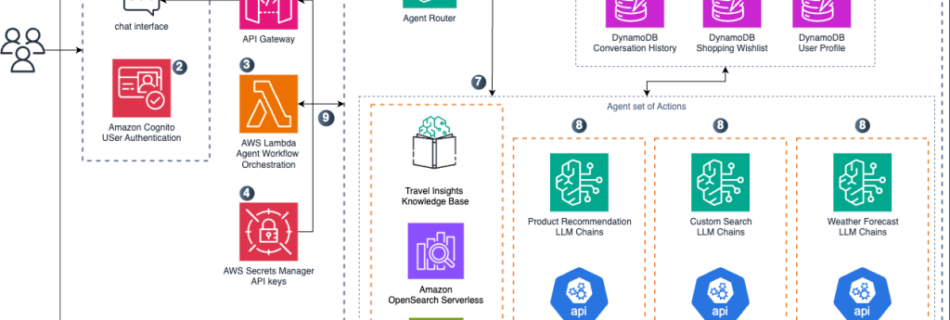
ML 18605 mcp architecture

Unlocking the power of Model Context Protocol (MCP) on AWS

We’ve witnessed remarkable advances in model capabilities as generative AI companies have invested in developing their offerings. Language models such as Anthropic’s Claude Opus 4 & Sonnet 4 and Amazon Nova on Amazon Bedrock can reason, write, and generate responses with increasing sophistication. But even as these models grow more powerful, they can only work …

1 Qls8qpSmax 1000x1000 1

Emulating the air-gapped experience: GDC Sandbox is now generally available

Many organizations in regulated industries and the public sector that want to start using generative AI face significant challenges in adopting cloud-based AI solutions due to stringent regulatory mandates, sovereignty requirements, the need for low-latency processing, and the sheer scale of their on-premises data. Together, these can all present institutional blockers to AI adoption, and …

Word Embeddings in Language Models

This post is divided into three parts; they are: • Understanding Word Embeddings • Using Pretrained Word Embeddings • Training Word2Vec with Gensim • Training Word2Vec with PyTorch • Embeddings in Transformer Models Word embeddings represent words as dense vectors in a continuous space, where semantically similar words are positioned close to each other.

Prompting Whisper for Improved Verbatim Transcription and End-to-end Miscue Detection

*Equal Contributors Identifying mistakes (i.e., miscues) made while reading aloud is commonly approached post-hoc by comparing automatic speech recognition (ASR) transcriptions to the target reading text. However, post-hoc methods perform poorly when ASR inaccurately transcribes verbatim speech. To improve on current methods for reading error annotation, we propose a novel end-to-end architecture that incorporates the …