Did Elon Musk Win the Election for Trump?
Through his wealth and cultural influence, Elon Musk undoubtedly strengthened the Trump campaign. WIRED unpacks whether it really was his efforts that sealed the deal for the president-elect.
Through his wealth and cultural influence, Elon Musk undoubtedly strengthened the Trump campaign. WIRED unpacks whether it really was his efforts that sealed the deal for the president-elect.
The growing use of artificial intelligence (AI)-based models is placing greater demands on the electronics industry, as many of these models require significant storage space and computational power. Engineers worldwide have thus been trying to develop neuromorphic computing systems that could help meet these demands, many of which are based on memristors.
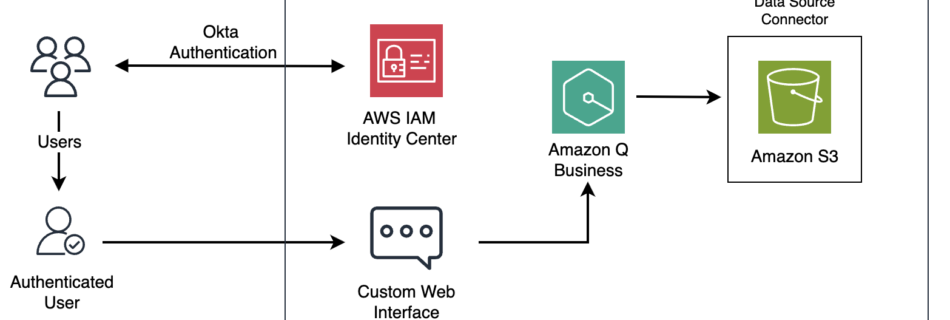
This post is co-written with Steven Craig from Hearst. To maintain their competitive edge, organizations are constantly seeking ways to accelerate cloud adoption, streamline processes, and drive innovation. However, Cloud Center of Excellence (CCoE) teams often can be perceived as bottlenecks to organizational transformation due to limited resources and overwhelming demand for their support. In …
Conspiracy theories about missing votes—which are not, in fact, missing—and something being “not right” are being spread widely on X in the wake of Donald Trump’s election victory.
Researchers have developed AI-driven mobile robots that can carry out chemical synthesis research with extraordinary efficiency. Researchers show how mobile robots that use AI logic to make decisions were able to perform exploratory chemistry research tasks to the same level as humans, but much faster.
In recent years, roboticists have introduced robotic systems that can complete missions in various environments, ranging from the ground to underground, aboveground and underwater settings. While several of these robots can grasp and move objects on the ground, the handling of objects by robotic systems underwater has so far proved more challenging.
Overwhelmed by manual tasks and data overload? Streamline your business and boost revenue with the best AI tools for business.
In real life, the machine learning model is not a standalone object that only produces a prediction.
Magnetic-One, Microsoft’s AI agent orchestration framework, deploys multiple agents to solve daily tasks autonomously.Read More
At an Arizona polling location, a college GOP group, supporters of an antisemitic influencer, and a Christian nationalist pastor were handing out hot dogs and burgers—but only if you voted for Trump.