1

Monitor embedding drift for LLMs deployed from Amazon SageMaker JumpStart

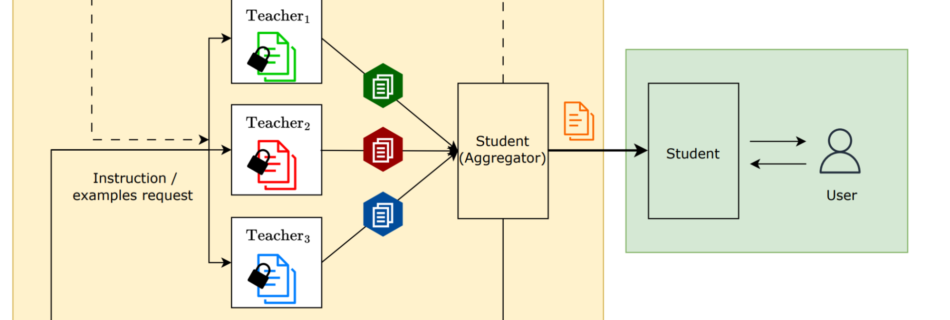
One of the most useful application patterns for generative AI workloads is Retrieval Augmented Generation (RAG). In the RAG pattern, we find pieces of reference content related to an input prompt by performing similarity searches on embeddings. Embeddings capture the information content in bodies of text, allowing natural language processing (NLP) models to work with …

1 Architecture.max 1000x1000 1

Automate public website indexing for efficient semantic search with Vertex AI

Introduction If you’re looking to transform the way you interact with unstructured data, you’ve come to the right place! In this blog, you’ll discover how the exciting field of Generative AI, specifically tools like Vector Search and large language models (LLMs), are revolutionizing search capabilities. You will learn the power of vector search and additionally, …

Scalable Pre-training of Large Autoregressive Image Models

This paper introduces AIM, a collection of vision models pre-trained with an autoregressive objective. These models are inspired by their textual counterparts, i.e., Large Language Models (LLMs), and exhibit similar scaling properties. Specifically, we highlight two key findings: (1) the performance of the visual features scale with both the model capacity and the quantity of …

5 signs you need a premium DNS service 

Buy a domain name. Associate that domain with a DNS server. Done.  When you’re spinning up a presence on the internet, domain registrars make it easier to get started with a basic authoritative domain name system (DNS) hosting. That’s what most small businesses need ultimately—a reliable service that answers DNS queries. No more, no less.  …

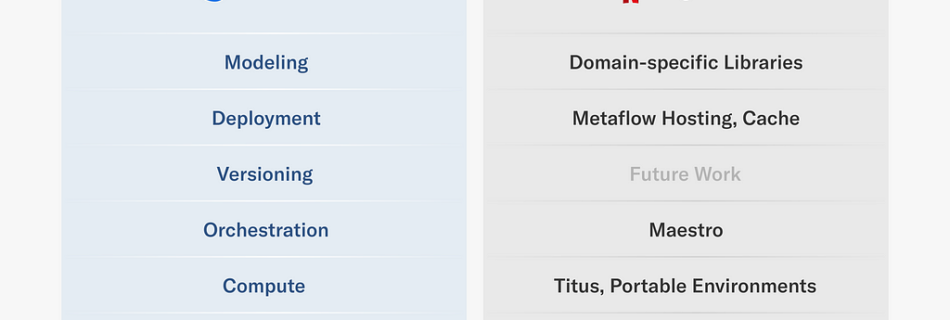
A16ZEmergingLLMStack on AWS

Designing generative AI workloads for resilience

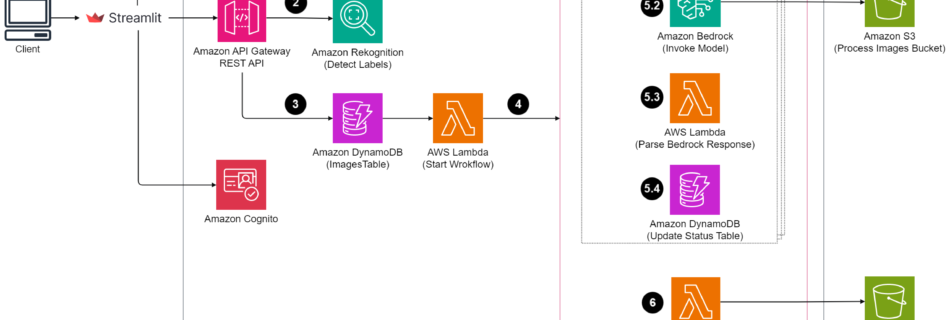
Resilience plays a pivotal role in the development of any workload, and generative AI workloads are no different. There are unique considerations when engineering generative AI workloads through a resilience lens. Understanding and prioritizing resilience is crucial for generative AI workloads to meet organizational availability and business continuity requirements. In this post, we discuss the …

29 no-cost ways to leap ahead in your cloud career this February

Take a leap into learning this February, and make the most of the extra day! We’ve created a list of 29 no-cost ways for you to leap ahead in your cloud career, so take your pick and get learning something new!  The basics of Google Cloud and generative AI for everyone to learn  1. #LearnGenerativeAI …

InstantTIGO2520hero 1

MobileDiffusion: Rapid text-to-image generation on-device

Posted by Yang Zhao, Senior Software Engineer, and Tingbo Hou, Senior Staff Software Engineer, Core ML Text-to-image diffusion models have shown exceptional capabilities in generating high-quality images from text prompts. However, leading models feature billions of parameters and are consequently expensive to run, requiring powerful desktops or servers (e.g., Stable Diffusion, DALL·E, and Imagen). While …

12A8QZrszozkXWZZ04vtb4aVg

Building with Palantir AIP: Logic Tools for RAG/OAG

by Chad Wahlquist, Palantir Forward Deployed Architect Welcome to another installment of our Building with AIP series, where Palantir engineers and architects take you through how to build end-to-end workflows using our Artificial Intelligence Platform (AIP). In this video, we’re continuing our dive into Ontology Augmented Generation (OAG) — this time, with logic tools. https://medium.com/media/df5fe2ba2783b58965314492f1049332/href Refresher on RAG/OAG For …

Building an early warning system for LLM-aided biological threat creation

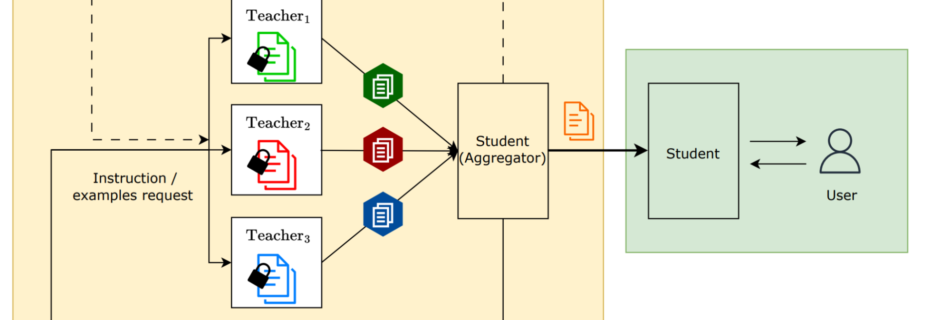
We’re developing a blueprint for evaluating the risk that a large language model (LLM) could aid someone in creating a biological threat. In an evaluation involving both biology experts and students, we found that GPT-4 provides at most a mild uplift in biological threat creation accuracy. While this uplift is not large enough to be conclusive, …

Why DDI solutions aren’t always ideal for authoritative DNS

The distinction between “internal” and “external” networks has always been somewhat false. Clients are accustomed to thinking about firewalls as the barrier between network elements we expose to the internet and back-end systems that are only accessible to insiders. Yet as the delivery mechanisms for applications, websites and content become more decentralized, that barrier is …