AI governance is rapidly evolving — here’s how government agencies must prepare
The global AI governance landscape is complex and rapidly evolving. Key themes and concerns are emerging, however government agencies should get ahead of the game by evaluating their agency-specific priorities and processes. Compliance with official policies through auditing tools and other measures is merely the final step. The groundwork for effectively operationalizing governance is human-centered, …
Read more “AI governance is rapidly evolving — here’s how government agencies must prepare”

Exciting Changes Ahead: Big Update
We have a very big and exciting update to share with you. Over the past few months, I have been publishing many of my AI insights and experiments on Substack. One of the things that LLMs are exposing is the role that psychology and bias play in creating and interpreting information. Information isn’t passive. It’s some …
Google DeepMind at ICLR 2024
Developing next-gen AI agents, exploring new modalities, and pioneering foundational learning
Conformal Prediction via Regression-as-Classification
Conformal prediction (CP) for regression can be challenging, especially when the output distribution is heteroscedastic, multimodal, or skewed. Some of the issues can be addressed by estimating a distribution over the output, but in reality, such approaches can be sensitive to estimation error and yield unstable intervals. Here, we circumvent the challenges by converting regression …
Read more “Conformal Prediction via Regression-as-Classification”
What you need to know about the CCPA rules on AI and automated decision-making technology
In November 2023, the California Privacy Protection Agency (CPPA) released a set of draft regulations on the use of artificial intelligence (AI) and automated decision-making technology (ADMT). The proposed rules are still in development, but organizations may want to pay close attention to their evolution. Because the state is home to many of the world’s …
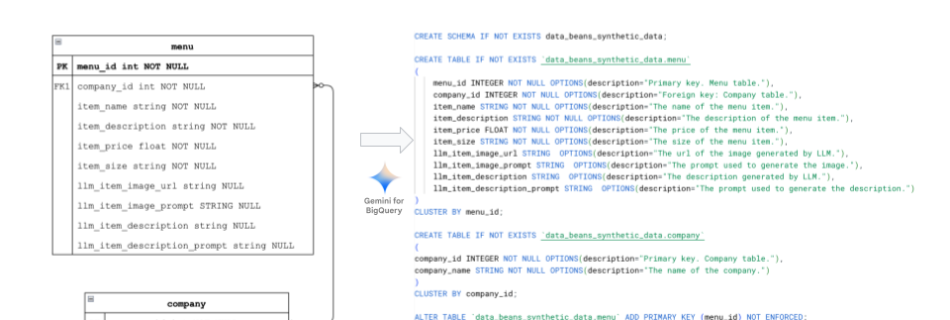
Simplifying data modeling and schema generation in BigQuery using multi-modal LLMs
The intricate hierarchical data structures in data warehouses and lakes sourced from diverse origins can make data modeling a protracted and error-prone process. To quickly adapt and create data models that meet evolving business requirements without having to rework them excessively, you need data models that are flexible, modular and adaptable enough to accommodate many …
Read more “Simplifying data modeling and schema generation in BigQuery using multi-modal LLMs”
Poly-View Contrastive Learning
Contrastive learning typically matches pairs of related views among a number of unrelated negative views. Views can be generated (e.g. by augmentations) or be observed. We investigate matching when there are more than two related views which we call poly-view tasks, and derive new representation learning objectives using information maximization and sufficient statistics. We show …
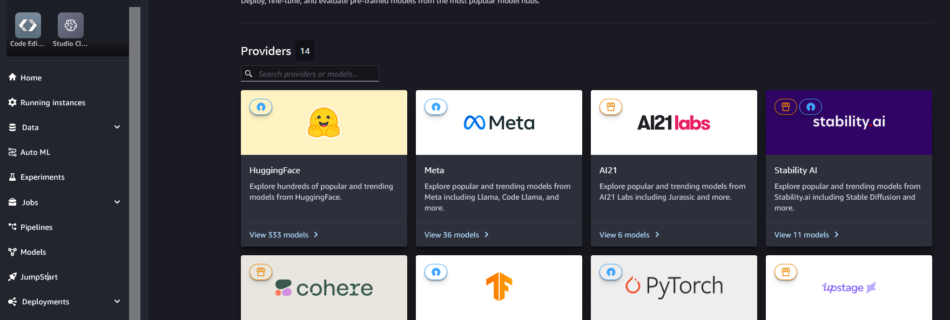
AWS Inferentia and AWS Trainium deliver lowest cost to deploy Llama 3 models in Amazon SageMaker JumpStart
Today, we’re excited to announce the availability of Meta Llama 3 inference on AWS Trainium and AWS Inferentia based instances in Amazon SageMaker JumpStart. The Meta Llama 3 models are a collection of pre-trained and fine-tuned generative text models. Amazon Elastic Compute Cloud (Amazon EC2) Trn1 and Inf2 instances, powered by AWS Trainium and AWS …
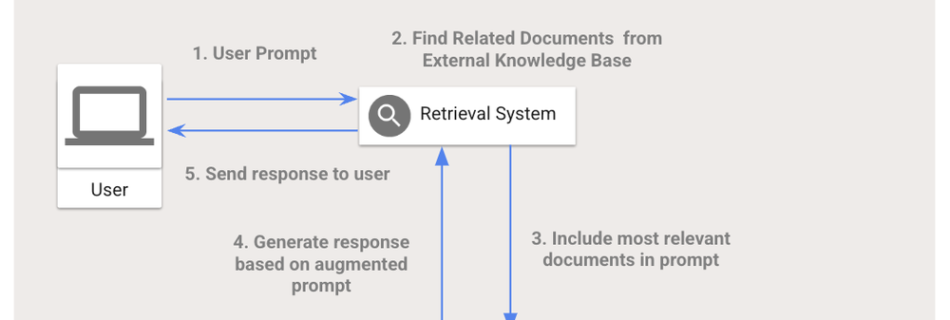
RAG in production faster with Ray, LangChain and HuggingFace
We’re excited to announce the release of a quickstart solution and reference architecture for retrieval augmented generation (RAG) applications, designed to accelerate your journey to production. In this post, you’ll learn how to quickly deploy a complete RAG application on Google Kubernetes Engine (GKE), and Cloud SQL for PostgreSQL and pgvector, using Ray, LangChain, and …
Read more “RAG in production faster with Ray, LangChain and HuggingFace”