Introducing Gemini 2.5 Flash
Gemini 2.5 Flash is our first fully hybrid reasoning model, giving developers the ability to turn thinking on or off.
Learning disentangled representations from unlabelled data is a fundamental challenge in machine learning. Solving it may unlock other problems, such as generalization, interpretability, or fairness. Although remarkably challenging to solve in theory, disentanglement is often achieved in practice through prior matching. Furthermore, recent works have shown that prior matching approaches can be enhanced by leveraging …
Read more “Disentangled Representational Learning with the Gromov-Monge Gap”
Editor’s Note: Product Designers are key members of Palantir product teams. This blog post features a banner by Product Designer Sarah, a self-reflection by Product Designer Phoebe on navigating her early career, and a Q&A with design colleagues. Insights from Palantir Product Design Phoebe, Product Designer I’m still figuring out what kind of designer I want to …
Read more “Palantir’s Blueprint for Early Career Success in Product Design”
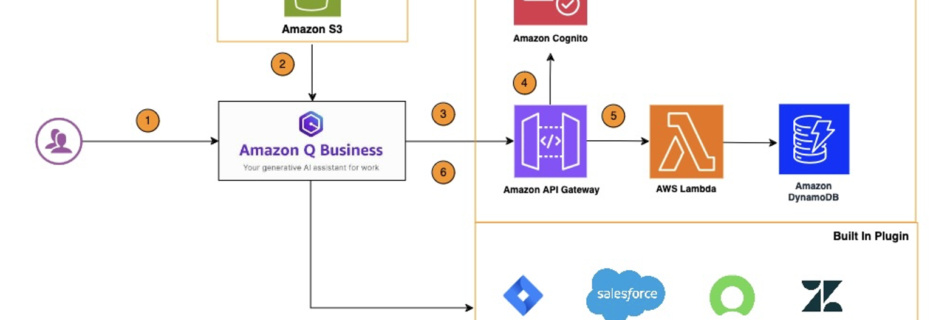
For many organizations, vast amounts of enterprise knowledge are scattered across diverse data sources and applications. Organizations across industries seek to use this cross-application enterprise data from within their preferred systems while adhering to their established security and governance standards. This post demonstrates how Zoom users can access their Amazon Q Business enterprise data directly …
Read more “Add Zoom as a data accessor to your Amazon Q index”
Transform text-based prompts into high-resolution eight-second videos in Gemini Advanced and use Whisk Animate to turn images into eight-second animated clips.
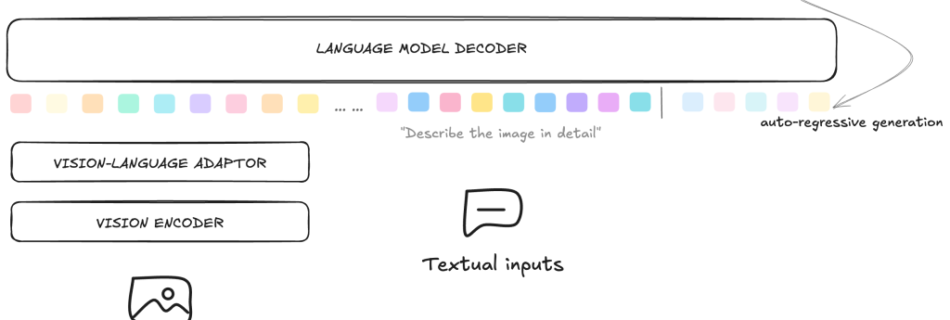
Building general-purpose models that can effectively perceive the world through multimodal signals has been a long-standing goal. Current approaches involve integrating separately pre-trained components, such as connecting vision encoders to LLMs and continuing multimodal training. While such approaches exhibit remarkable sample efficiency, it remains an open question whether such late-fusion architectures are inherently superior. In …
As organizations scale their Amazon Elastic Kubernetes Service (Amazon EKS) deployments, platform administrators face increasing challenges in efficiently managing multi-tenant clusters. Tasks such as investigating pod failures, addressing resource constraints, and resolving misconfiguration can consume significant time and effort. Instead of spending valuable engineering hours manually parsing logs, tracking metrics, and implementing fixes, teams should …
Read more “Automate Amazon EKS troubleshooting using an Amazon Bedrock agentic workflow”
This paper was accepted at the Workshop on Foundation Models in the Wild at ICLR 2025. Visual understanding is inherently contextual – what we focus on in an image depends on the task at hand. For instance, given an image of a person holding a bouquet of flowers, we may focus on either the person …
Read more “FocalLens: Instruction Tuning Enables Zero-Shot Conditional Image Representations”
This post is co-written with Kim Nguyen and Shyam Banuprakash from Clario. Clario is a leading provider of endpoint data solutions to the clinical trials industry, generating high-quality clinical evidence for life sciences companies seeking to bring new therapies to patients. Since Clario’s founding more than 50 years ago, the company’s endpoint data solutions have …
At Apple, we believe privacy is a fundamental human right. And we believe in giving our users a great experience while protecting their privacy. For years, we’ve used techniques like differential privacy as part of our opt-in device analytics program. This lets us gain insights into how our products are used, so we can improve …
Read more “Understanding Aggregate Trends for Apple Intelligence Using Differential Privacy”