ML 20897 1 1 1

Exploring self-distilled reasoning for supervised fine-tuning with Amazon Nova

When you fine-tune a model using Supervised Fine-Tuning (SFT), creating high-quality chain-of-thought (CoT) reasoning traces for your training data is often impractical and can be prohibitively expensive. As a result, you might choose to skip reasoning during SFT and train with only inputs and outputs. However, reasoning is a key capability of the Amazon Nova …

1 Gemini Generated Imagemax 1000x1000 1

Why AI apps fail in production (And how Google solved it)

We are living in the golden age of the weekend AI side project. Thanks to agentic engineering and LLMs, the time to go from a blank IDE to a functional local application has dropped from quarters to hours. You can build your wildest ideas over a cup of coffee. But inside an enterprise ecosystem with …

RayRoPE: Projective Ray Positional Encoding for Multi-View Attention

We study positional encodings for multi-view transformers that process tokens from a set of posed input images, and seek a mechanism that encodes patches uniquely, allows SE(3)-invariant attention with multi-frequency similarity, and can be adaptive to the geometry of the underlying scene. We find that prior (absolute or relative) encoding schemes for multi-view attention do …

ML 20957 1

Custom OS installation now available on AWS DeepRacer devices

With the stock firmware and software, developers couldn’t modify their AWS DeepRacer devices to use the latest operating systems. Now, developers can upgrade or install a custom operating system (OS) by using a newly released bootloader, which extends the life of these hardware devices. AWS DeepRacer devices are fully autonomous 1/18th scale race cars driven …

When Unlearning Is Free: Leveraging Low Influence Points to Reduce Computational Costs

As concerns around data privacy in machine learning grow, the ability to unlearn—or remove—specific data points from trained models becomes increasingly important. While state-of-the-art unlearning methods have emerged in response, they typically treat all points in the forget set equally. In this work, we challenge this approach by asking: do points that have a negligible …

1GKGOrp0xddZwHomMhiSeCA

In-House LLM Serving at Netflix

By AI Platform’s Model Runtime team and Inference team Introduction Most organizations consume LLMs through hosted APIs. Netflix went further — we run the full stack ourselves, from model deployment through inference, inside our existing production environment rather than a separate ML silo. Some of those decisions weren’t obvious, and a few revealed their trade-offs only under …

ML 20807 1

Transform your sales organization with Amazon Quick: your new agentic AI teammate

The average sales rep spends only 40% of their time actually selling. The rest is eaten up by necessary, but lower-value work: customer relationship management (CRM) updates, prospect research, email drafting, and endless context-switching between tools. Before you know it, the day has passed and you’ve spent only a small fraction of your time on …

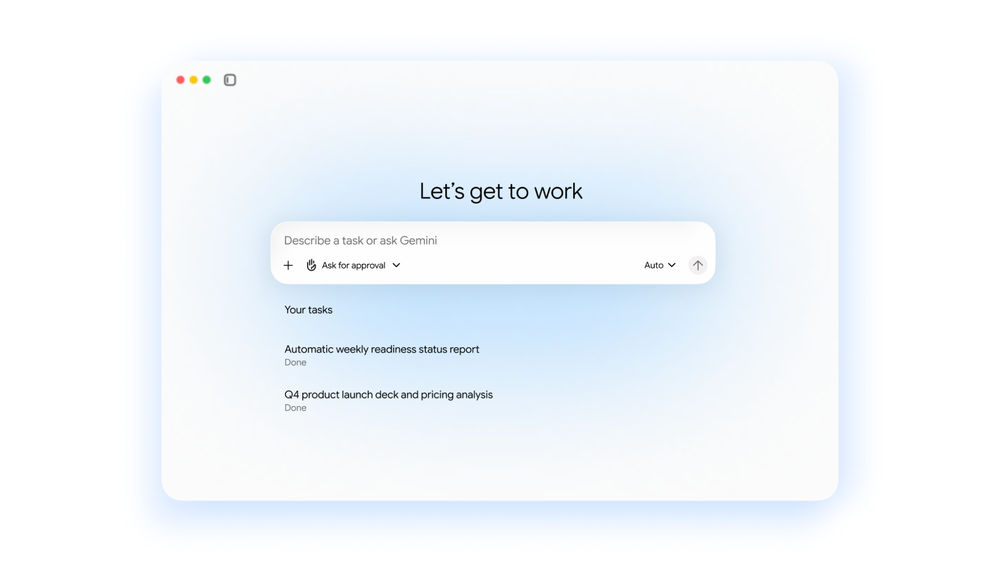
13 hands-on demos to build on Gemini Enterprise Agent Platform

Earlier this year, we introduced Gemini Enterprise Agent Platform, where you can build, scale, govern, and optimize agents. Today, we’re sharing 13 demos that walk you through what Agent Platform can do. Each one teaches a concept, a pattern, or an architecture you can put to work immediately. The best part? You don’t have to …

Location-Invariant Properties of Functions Versus Properties of Distributions: United in Testing but Separated in Verification

A property of functions is called location-invariant (or symmetric) if it can be characterized in terms of the frequencies in which each value occurs in the function, regardless of the locations in which each value occurs. It is known that the (query) complexity of testing location-invariant properties of functions is closely related to the (sample) …

ML 20588 1

Build enterprise search for agents with Amazon Bedrock Managed Knowledge Base

Knowledge bases that ground agents and generative AI applications over your enterprise data are hard to build at scale. Teams typically stitch together connectors, parsers, vector stores, knowledge graphs, and retrieval logic, then operationalize all of it for production. Each piece brings its own challenges. You must decide which data sources to connect and how …