Shared Selective Persistent Memory for Agentic LLM Systems

Agentic LLM systems that generate code through multi-turn tool use face a fundamental context problem: each session starts from zero, discarding the configuration choices, domain constraints, data schemas, and tool-use patterns that made previous sessions productive. Naively persisting entire conversation histories is both token-inefficient and counterproductive—irrelevant context degrades generation quality. We introduce shared selective persistent …

ML 21213 2

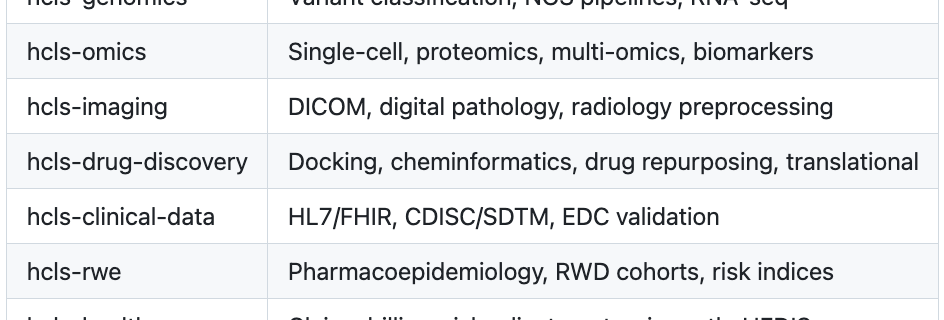
Improving HCLS AI reasoning with open-source agent skills

AI agents built on foundation models (FMs) often misapply healthcare and life sciences (HCLS) decision frameworks, even when they’ve seen the guidelines in training and in the system prompt. Ask an agent to classify a TP53 missense variant using ACMG/AMP criteria. It will cite the correct framework but misapply evidence categories, skip population frequency thresholds, …

2022 S Joyce Headshotmax 1000x1000 1

Cloud CISO Perspectives: How Google monitors AI threats and advances AI defenses

Welcome to the first Cloud CISO Perspectives for September 2026. Today, Sandra Joyce shares the latest details on Google’s visibility into how attackers are using AI, and how we’re using AI to stop them. As with all Cloud CISO Perspectives, the contents of this newsletter are posted to the Google Cloud blog. If you’re reading …

One material, two transistor types: ‘Universal charge injector’ points toward densely stacked AI chips

A new approach could help make future AI chips smaller and more energy-efficient. A KAIST-led research team has used a single material to address one of the major obstacles facing atomically thin semiconductors: the difficulty of efficiently injecting charge. The technology could contribute to next-generation AI and low-power semiconductor devices in which multiple ultrathin layers …

ML 20790 1

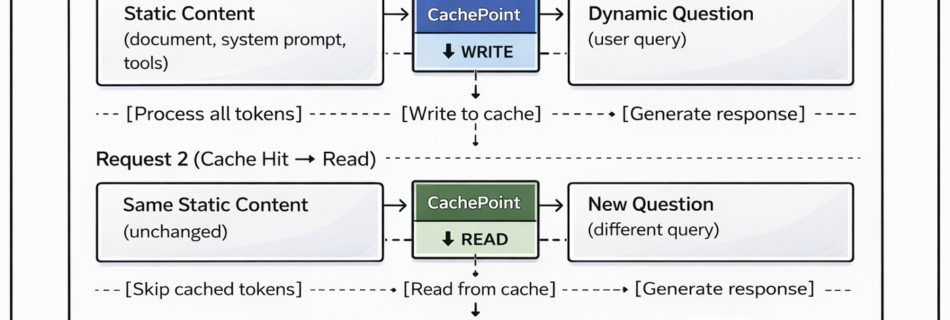
Optimizing cost and latency with Amazon Bedrock prompt caching

Prompt caching in Amazon Bedrock can reduce your input token costs by up to 90 percent when you repeatedly send the same context to foundation models, based on Amazon Bedrock prompt caching pricing. Without caching, a 10,000-token contract sent alongside 50 user questions means 500,000 input tokens billed at full price for content the model …

AI can sound empathetic and human—but not at the same time

AI-generated texts are increasingly perceived as human, but people can still recognize human writing as such. However, this distinction becomes much more difficult once AI is explicitly instructed to come across as human. This is shown by research involving, among others, Tilburg University, published in the journal Nature Communications. Several experiments involving more than 3,000 …