Tool Calling vs. Code Execution for AI Agents: Choosing the Right Action Primitive
Theory is easier to trust once it’s running against a real API, so both examples in this article use the same tool — a get_weather function backed by
Theory is easier to trust once it’s running against a real API, so both examples in this article use the same tool — a get_weather function backed by
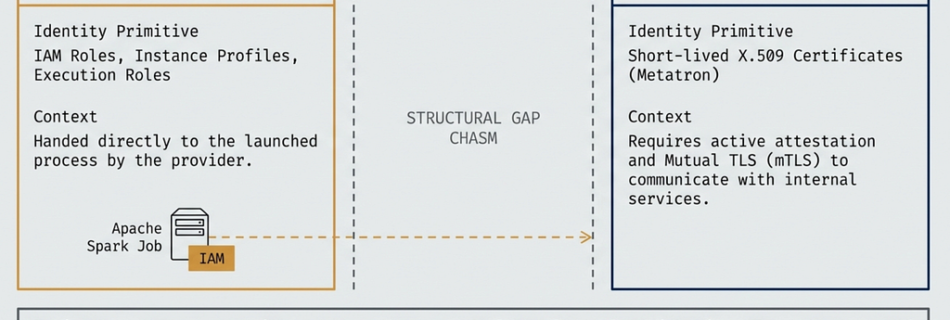
By Dhruv Pratap Introduction Organizations that have been around for a while usually run two identity systems side by side. One belongs to the cloud provider: IAM roles, instance profiles, execution roles. The other is your own, and it is the one your internal services actually check when they decide whether to answer a request. On infrastructure …
Read more “Trading a Cloud Identity for Your Own: Workload Attestation on Managed Compute”
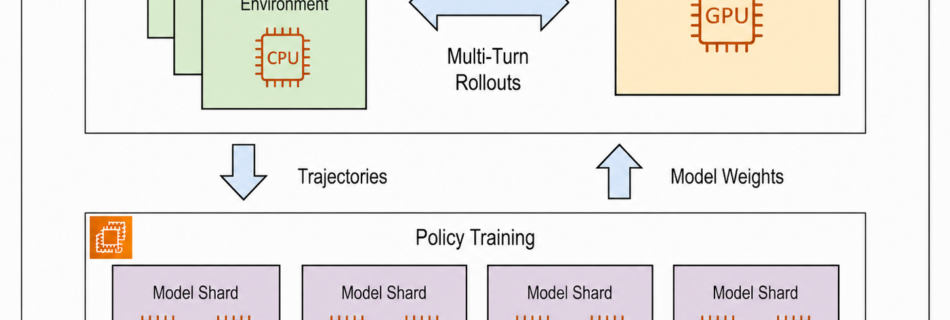
When you post-train a Mixture-of-Experts (MoE) model with Reinforcement Learning from Human Feedback (RLHF) or Group Relative Policy Optimization (GRPO) at scale, three simultaneous challenges emerge. The first requires coordinating heterogeneous compute for rollout generation and policy training. Second, sustaining high-throughput communication across hundreds of accelerators. And third, dynamically orchestrating every subsystem to keep them …
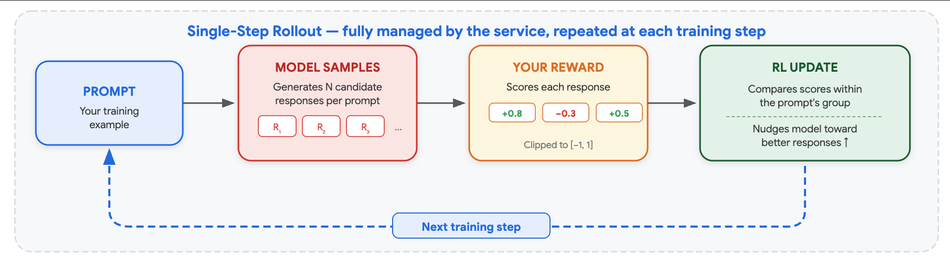
Reinforcement learning (RL) has been a keystone of modern LLM post-training, but it demands large training clusters and access to model internals that external customers can’t have with proprietary models like Gemini. So here at Google Cloud, we packaged it into a managed RL fine-tuning service (RLFT service) — you bring prompts and a reward …
Read more “Best practices guide for customizing Gemini models via Reinforcement Learning (RL)”
Is Quince the Away alternative we’ve been waiting for? I tested its luggage to find out, and the price difference is hard to ignore.
Researchers have shown that exotic quantum particles called non-Abelian anyons can perform the full range of operations needed for universal quantum computing. Using 54 qubits on Quantinuum’s H2 processor, they combined braiding and fusion to unlock capabilities that braiding alone could not provide.
When we read a car’s license plate, we tend to focus on the numbers and letters, paying little attention to the surrounding buildings or sky. An artificial-intelligence (AI) system, however, may still process those surrounding details, consuming energy even when they contribute little to the task. As cameras capture ever more detailed images, this unnecessary …
Read more “AI hardware design could filter out irrelevant visual data to reduce energy use”
submitted by /u/YajuShinki [link] [comments]
In this article, you will learn the key differences between AI workflows and agents, and how to decide which approach is right for your use…
System-wide Dictation on Apple devices runs entirely on-device, and the speech it transcribes reaches the foundation model through a tokenizer: an encoder that maps short windows of waveform onto the representation the language model reads. Because that model is sparsely activated under Instruction-Following Pruning, only a small subset of its experts occupies DRAM at any …
Read more “Compressing Streaming Neural Audio Encoders via Latent-Space Distillation”