Iron Man flying to meet his fans. With text2video. (@edmondyang)
submitted by /u/kaiwai_81 [link] [comments]
submitted by /u/kaiwai_81 [link] [comments]
Drumroll please!After weeks of anticipation and hundreds of amazing submissions, we’re thrilled to finally announce the winners of our latest contest – the 100K Preset Palooza! The challenge? To create the most stunning presets using our AI-powered NightCafe platform. The prize? Five lucky winners would have their creations permanently featured on our website for all …
Read more “Unveiling the Victors: NightCafe’s Preset Contest Winners Announced!”
Luxury brands are iconic. Their names show up everywhere from the red carpet to rap songs to Instagram and TikTok feeds. What makes these coveted names so alluring and aspirational to luxury consumers? What can other brands learn from modern luxury brand marketing strategies? Luxury brand marketing strategies center around quality and exclusivity Luxury brands …
Read more “3 Luxury Brand Marketing Strategies that Convey Long-term Value”
We’ve implemented initial support for plugins in ChatGPT. Plugins are tools designed specifically for language models with safety as a core principle, and help ChatGPT access up-to-date information, run computations, or use third-party services.
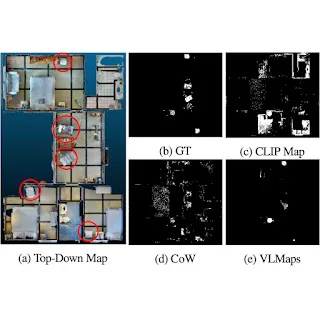
Posted by Oier Mees, PhD Student, University of Freiburg, and Andy Zeng, Research Scientist, Robotics at Google People are excellent navigators of the physical world, due in part to their remarkable ability to build cognitive maps that form the basis of spatial memory — from localizing landmarks at varying ontological levels (like a book on …
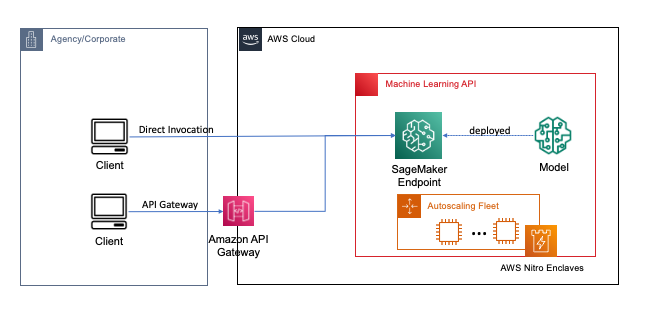
This is joint post co-written by Leidos and AWS. Leidos is a FORTUNE 500 science and technology solutions leader working to address some of the world’s toughest challenges in the defense, intelligence, homeland security, civil, and healthcare markets. Leidos has partnered with AWS to develop an approach to privacy-preserving, confidential machine learning (ML) modeling where …
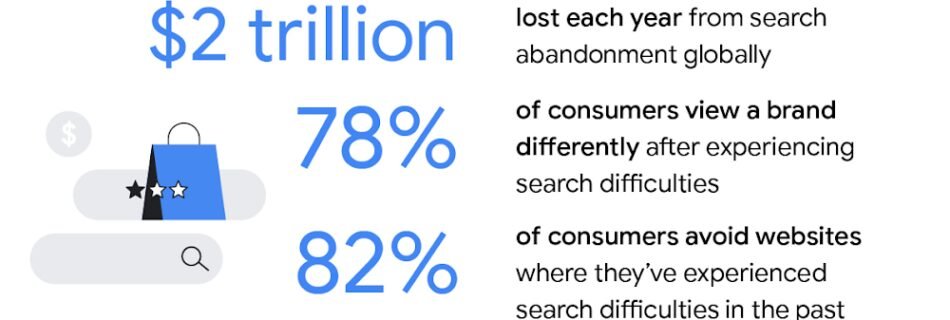
Search abandonment—when a shopper searches for a product on a retailer’s website but doesn’t find what they are looking for—costs retailers more than $2 trillion annually globally1, and more than $234 billion in the United States alone. Today, we’re releasing new data about the impact of search abandonment, including its role in brand loyalty and …
Read more “New research: Search abandonment continues to vex retailers worldwide”
MVision AI deploys an AI segmentation model to create more personalized cancer treatment plans and improve clinical decision-making.Read More
The interrogation of CEO Shou Zi Chew highlighted US lawmakers’ own failure to pass privacy legislation.
Researchers have demonstrated a caterpillar-like soft robot that can move forward, backward and dip under narrow spaces. The caterpillar-bot’s movement is driven by a novel pattern of silver nanowires that use heat to control the way the robot bends, allowing users to steer the robot in either direction.