The Controversy of AI Voices and Personal Rights: The Case of “Sky”

We used Midjourney to create this image based on the image of Joaquin Phoenix in a poster for the movie “Her” – is that ethical? In the rapidly evolving world of AI, OpenAI recently faced a significant challenge: the removal of a voice named “Sky” from ChatGPT due to its striking resemblance to Scarlett Johansson’s …

How to establish lineage transparency for your machine learning initiatives

Machine learning (ML) has become a critical component of many organizations’ digital transformation strategy. From predicting customer behavior to optimizing business processes, ML algorithms are increasingly being used to make decisions that impact business outcomes. Have you ever wondered how these algorithms arrive at their conclusions? The answer lies in the data used to train …

image 1 I74W1WI.max 1000x1000 1

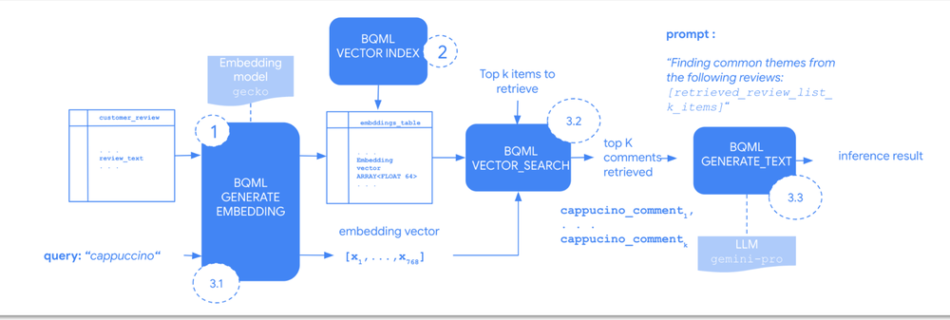
Unlocking enhanced LLM capabilities with RAG in BigQuery

The rise of generative AI has brought forth exciting possibilities, but it also has its limitations. Large language models (LLMs), the workhorses of generative AI, often lack access to specific data and real-time information, which can hinder their performance in certain scenarios. Retrieval augmented generation (RAG) is a technique within natural language processing that uses …

Robot-phobia could exasperate hotel, restaurant labor shortage

Using more robots to close labor gaps in the hospitality industry may backfire and cause more human workers to quit, according to a new study. The study, involving more than 620 lodging and food service employees, found that ‘robot-phobia’ — specifically the fear that robots and technology will take human jobs — increased workers’ job …

AI trained to draw inspiration from images, not copy them

Powerful new artificial intelligence models sometimes, quite famously, get things wrong—whether hallucinating false information or memorizing others’ work and offering it up as their own. To address the latter, researchers led by a team at The University of Texas at Austin have developed a framework to train AI models on images corrupted beyond recognition.