ControlNet did a good job rejuvenating a stained blurry 70 year old photo of my 90 year old grandparents.
submitted by /u/prean625 [link] [comments]
submitted by /u/prean625 [link] [comments]
With visual AI, it is possible to ship mobile apps continuously with speed and accuracy not seen with traditional mobile testing techniques.Read More
Proprietary chargers suck. With wireless charging, Garmin’s Vivomove Trend is moving in the right direction.
submitted by /u/ZvenAls [link] [comments]
Loyalty programs have taken over just about everything from fast food to luxury travel. The satisfaction customers feel from earning points and rewards seems to be at the center of the modern customer experience. But, it isn’t just the gamification aspect that makes loyalty programs so alluring. It’s that they make every participating customer feel …
Read more “6 Loyalty Program Best Practices for Enterprise Businesses”
Visual content is essential for content marketing in 2023. Here are the top 12 Snappa alternatives to supercharge your visual content strategy this year.

(Scroll down for English translation below) Wie können wir Polizeibehörden ermöglichen, den Herausforderungen der digitalen Zeit besser gerecht zu werden? Wie können wir gleichzeitig Grundrechte wahren? Dies sind Fragen, mit denen sich die Innenministerien des Bundes und der Länder bereits seit 2016 im Rahmen der sogenannten Saarbrücker Agenda beschäftigen. Konkret geht es darum, eine “moderne, …
Read more “Wie Palantir die Digitalisierung deutscher Polizeien unterstützt”
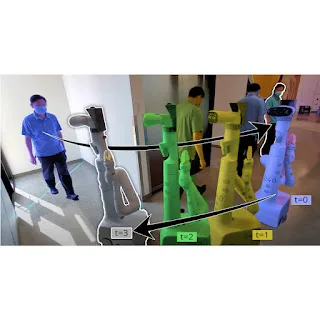
Posted by Krzysztof Choromanski, Staff Research Scientist, Robotics at Google, and Xuesu Xiao, Visiting Researcher, George Mason University Despite decades of research, we don’t see many mobile robots roaming our homes, offices, and streets. Real-world robot navigation in human-centric environments remains an unsolved problem. These challenging situations require safe and efficient navigation through tight spaces, …
Read more “Performer-MPC: Navigation via real-time, on-robot transformers”

Amazon Kendra is a highly accurate and simple-to-use intelligent search service powered by machine learning (ML). Amazon Kendra offers a suite of data source connectors to simplify the process of ingesting and indexing your content, wherever it resides. Valuable data in organizations is stored in both structured and unstructured repositories. An enterprise search solution should …
Read more “Index your Microsoft Exchange content using the Exchange connector for Amazon Kendra”
Full automation is not the final desired state, but it is the turbocharger that can fire new efficiencies in electronic engineering.Read More